Equipment is the largest single line item in most car wash builds. It is also the decision that determines your revenue ceiling, your maintenance costs, and how much your business relies on staff. Get this choice right and the rest of the business follows a predictable path. Get it wrong and you are stuck with the wrong machine for your market and traffic volume.
This guide covers what car wash equipment actually costs across each major type, what the price differences get you, and what to watch for when comparing quotes. For context on how equipment costs fit into the total cost of a build — including site work, utilities, and permits — see How Much Does It Cost to Build a Car Wash from Scratch?. For the complete business model overview, see the car wash business guide.
How to Read Equipment Quotes
Equipment quotes cover the machine, installation labor, and sometimes a first-year service contract. They do not cover site preparation, utility connections, payment hardware, chemical supply, canopy work, or water reclaim systems. Always ask distributors to itemize so you know exactly what is and is not included — then get the site prep and utility costs estimated separately before you commit.
Self-Serve Bay Equipment
What It Is
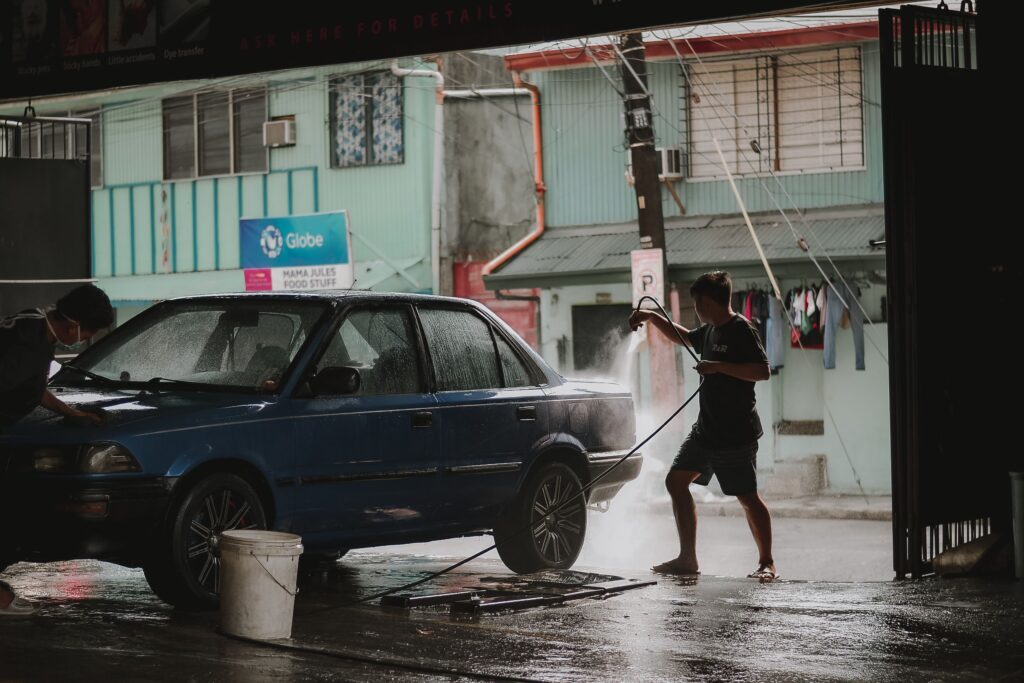
Self-serve bays provide customers with a high-pressure wand, foam brush, and rinse options. The customer does all the washing. You provide equipment, water, chemicals, and a functional bay.
Equipment Cost
| Equipment Item | Low Estimate | High Estimate |
|---|---|---|
| Wand and foam brush system (per bay) | $8,000 | $20,000 |
| Timer and coin/card payment unit (per bay) | $3,000 | $10,000 |
| Chemical injection system | $2,000 | $8,000 |
| Central equipment room (pump, boiler, compressor) | $15,000 | $40,000 |
| Vacuum stations (per unit) | $2,500 | $6,000 |
| Total per bay (equipment only) | $15,000 | $40,000 |
A three-bay self-serve setup with a shared central equipment room and two vacuum stations typically runs $60,000 to $110,000 in equipment alone, before site work or utilities.
Key Brands
The major self-serve equipment manufacturers in North America are PDQ, Belanger, and Mark VII. Choose the brand whose local distributor has the strongest service track record in your region — downtime costs more than the price difference between machines.
Revenue Reality
Self-serve generates $5 to $8 per car. It is a low-overhead model with a low ceiling. For the full income breakdown including monthly net profit figures, see How Much Does a Car Wash Make Per Month?.
In-Bay Automatic Equipment
What It Is
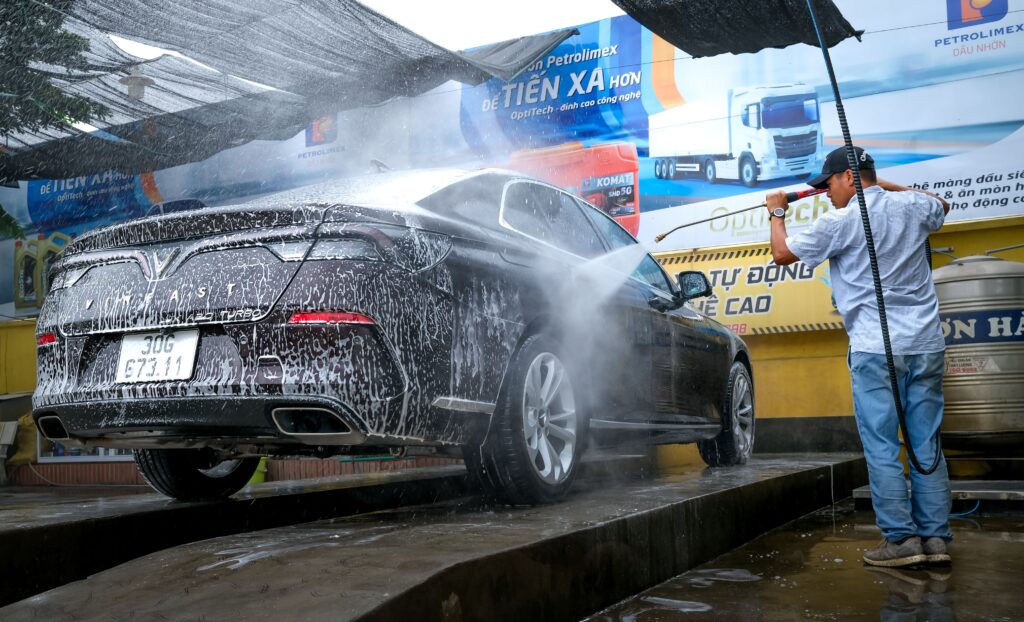
An in-bay automatic is a single machine that moves around a stationary car while the driver stays inside. No staff required. No physical effort from the customer. The most popular upgrade path for existing self-serve operators and the most common equipment choice for independent operators opening a new single-site wash.
Equipment Cost
| Equipment Item | Low Estimate | High Estimate |
|---|---|---|
| Friction in-bay automatic machine | $80,000 | $120,000 |
| Touchless in-bay automatic machine | $90,000 | $150,000 |
| Hybrid friction/touchless machine | $100,000 | $150,000 |
| Chemical injection and dispensing system | $5,000 | $15,000 |
| Payment kiosk (per bay entrance) | $8,000 | $20,000 |
| License plate recognition system | $10,000 | $25,000 |
| Dryer system (if not included) | $5,000 | $15,000 |
| Total per machine (equipment only) | $90,000 | $175,000 |
Most in-bay automatic quotes bundle installation. Confirm this before comparing prices — a machine that is $10,000 cheaper but excludes installation can easily cost more in total.
Friction vs. Touchless vs. Hybrid
Friction machines use soft-cloth or foam brushes that physically contact the vehicle. They clean effectively on most vehicles, handle heavy soiling well, and are faster per cycle — the most popular choice by volume.
Touchless machines use high-pressure water and chemicals with no physical contact. They are gentler on vehicles with paint protection film or specialty wraps, a growing consideration as these products become more common.
Hybrid machines can operate in both modes, giving operators flexibility. They cost more upfront but offer the widest market appeal.
For most independent operators, a quality friction machine from a major manufacturer is the right default unless your local market has a specific reason to favor touchless. Poor equipment selection relative to your market is one of the factors covered in Why Car Washes Fail: 7 Risks Every New Owner Should Know.
Key Brands
Sonny’s CarWash, WashTec, and PDQ are the dominant in-bay automatic manufacturers. At this investment level, the distributor’s local service response time matters more than brand preference — ask specifically about parts availability and technician response windows before buying.
Revenue Reality
An in-bay automatic generates $8 to $14 per car. Two well-located machines represent a solid mid-tier business with low staffing requirements. For the break-even timeline on a two-machine build, see the car wash break-even analysis.
Express Tunnel Equipment
What It Is
A conveyor tunnel system moves cars through a fixed sequence of wash stages on a moving track. Throughput is dramatically higher than in-bay — a well-run tunnel can process 100 to 200 cars per hour. This is the model that powers the monthly membership programs now dominating the industry.
Equipment Cost
| Equipment Item | Low Estimate | High Estimate |
|---|---|---|
| Conveyor system | $30,000 | $80,000 |
| Wash arch and applicator equipment | $60,000 | $150,000 |
| Dryer system | $20,000 | $60,000 |
| Chemical injection and management system | $15,000 | $40,000 |
| Vacuum stations (per unit) | $3,000 | $8,000 |
| Payment and POS system | $20,000 | $60,000 |
| License plate recognition | $15,000 | $35,000 |
| Total tunnel equipment package | $150,000 | $500,000 |
Tunnel Length and Throughput
Tunnel length directly affects throughput, wash quality, and equipment cost.
| Tunnel Length | Throughput (cars/hr) | Typical Equipment Cost |
|---|---|---|
| 60 feet | 60 — 80 | $150,000 — $250,000 |
| 90 feet | 80 — 120 | $200,000 — $350,000 |
| 120 feet | 100 — 160 | $280,000 — $450,000 |
| 130+ feet | 140 — 200+ | $350,000 — $500,000+ |
Longer tunnels accommodate more wash stages and more differentiated pricing tiers — which support both premium per-wash pricing and membership upsells. Understanding how to structure and grow a membership program from day one is covered in Car Wash Membership Programs: How to Build Recurring Revenue from Day One.
Key Brands
Sonny’s CarWash, Coleman Hanna, and Belanger are the leading tunnel equipment suppliers. At this investment level, confirm parts availability and service response time commitments in writing before signing any contract.
Revenue Reality
A tunnel generating 300 cars per day at an average of $15 per car produces $4,500 in daily gross revenue — $135,000 per month. Add 1,500 monthly members at $25 per month and monthly gross reaches $172,500. This is the income profile that makes tunnel builds justify their capital requirements. The full income breakdown is in How Much Does a Car Wash Make Per Month?.
Equipment Cost vs. Total Build Cost
Equipment is typically 30% to 50% of total startup cost for self-serve and in-bay builds, and 20% to 35% for tunnel builds where land and construction dominate.
| Build Type | Equipment Cost | Total Build Cost (Typical) | Equipment as % of Total |
|---|---|---|---|
| Self-serve (3 bays) | $60,000 — $110,000 | $130,000 — $440,000 | 35 — 50% |
| In-bay automatic (2 machines) | $180,000 — $350,000 | $270,000 — $735,000 | 40 — 55% |
| Express tunnel | $150,000 — $500,000 | $1,000,000 — $4,600,000 | 15 — 35% |
This is why operators who budget based on equipment quotes alone consistently underestimate total startup cost. The full breakdown of all non-equipment build costs is in How Much Does It Cost to Build a Car Wash from Scratch?.
How to Evaluate Equipment Quotes
When comparing quotes from distributors, go beyond price and check these five things:
What is included. Confirm whether installation, chemical injection systems, payment hardware, and first-year service are bundled or priced separately.
Warranty terms. Standard warranties run one to two years on parts and labor. Some manufacturers offer extended coverage on major components. Read the warranty — it significantly affects real cost of ownership in years two through five.
Parts availability. Ask each distributor how quickly they can get critical parts to your location and whether they stock common wear items locally. Downtime on a busy Saturday costs far more than the price difference between equipment tiers.
Service response time. Get a specific response time commitment in writing, not a general assurance.
Training and support. Confirm operator training is included — chemical management, daily maintenance, and basic troubleshooting should all be covered. Knowing how to run a car wash day-to-day starts with proper equipment training at installation.
Summary
Car wash equipment costs range from $15,000 per self-serve bay to $500,000 for a full express tunnel package. The right equipment choice depends on your site, your target market, and your capital — not on which type has the highest theoretical revenue ceiling.
Whichever type you choose, treat the equipment cost as one input into the total project budget, not the whole picture. For the complete build cost breakdown, see How Much Does It Cost to Build a Car Wash from Scratch?. For payback timelines, see the car wash break-even analysis. And if you are still weighing whether to build new or buy an existing operation, Buying vs. Building a Car Wash and Is a Car Wash a Good Investment in 2026? both address that question directly.
