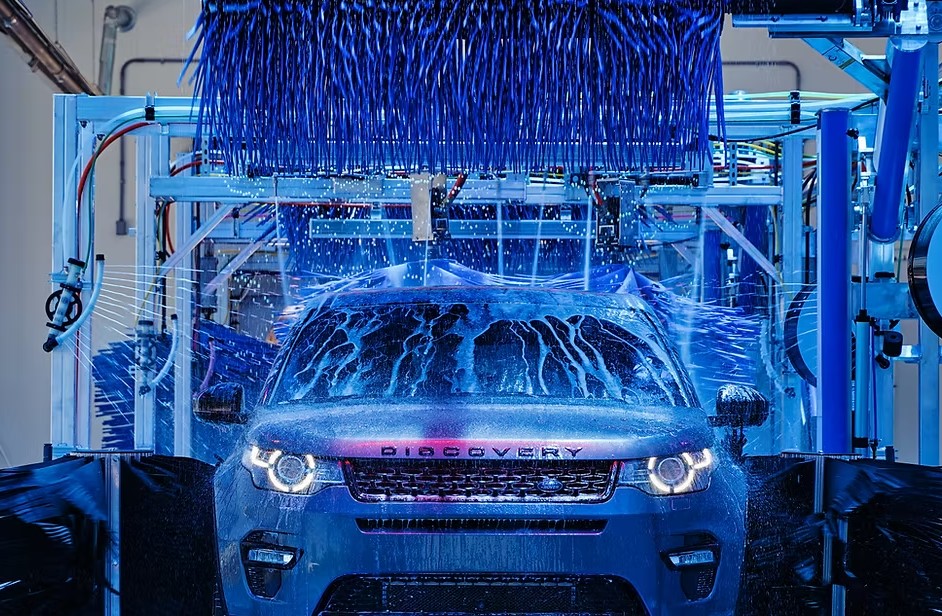
Quick Answer: A well-run self-serve or automatic car wash can net $3,000 to $15,000 per month after expenses depending on size, type, and location. Startup costs range from $50,000 for a self-serve bay conversion to $500,000+ for a new express tunnel build. Most owners break even in 3 to 7 years.
A car wash business is one of the most durable cash-flow businesses available to independent operators. Cars will always get dirty. People will always pay someone else to clean them. The machines do the work — you collect the revenue.
But a car wash is not a passive business you set up and forget. It has serious startup capital requirements, real maintenance demands, and location variables that determine whether you make money or bleed it.
This guide breaks down exactly how a car wash business works — startup costs, daily operations, realistic profit figures, and the risks that catch new owners off guard. No hype. No estimates pulled from thin air. Each section below links to a deeper, dedicated breakdown if you want to go further on any specific piece.
What This Guide Covers
- What is a car wash business and how does it work?
- Types of car wash business models
- Startup costs — full breakdown
- How a car wash runs day to day
- How much profit a car wash makes
- Risks and why car washes fail
- How to start a car wash business — step by step
- Is a car wash worth starting in 2026?
What Is a Car Wash Business?
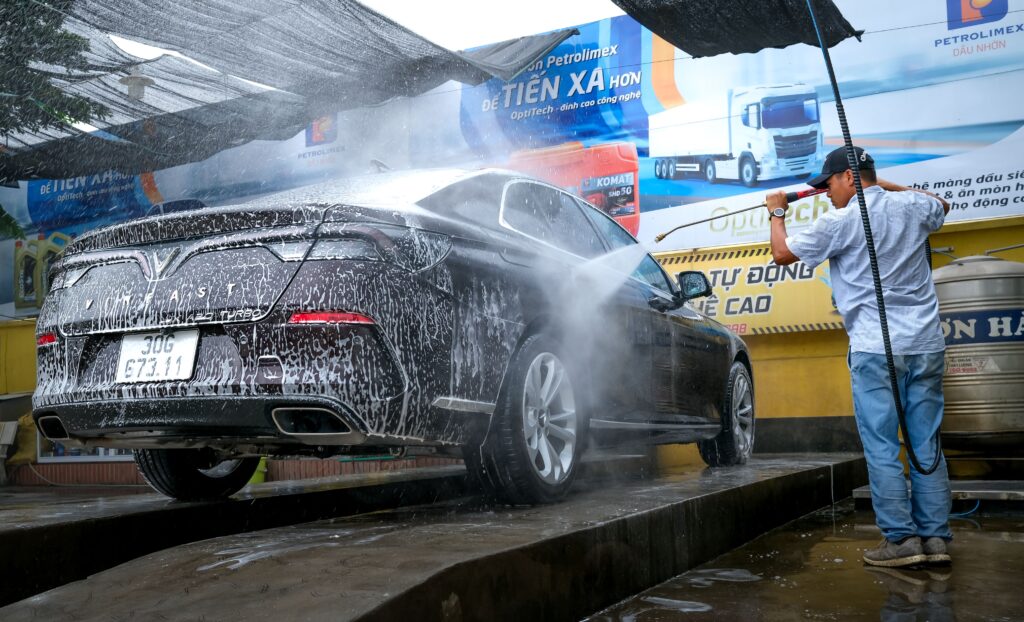
A car wash business earns money by cleaning vehicles — automatically, manually, or through a combination of both. Customers pay per wash or through a monthly membership plan, and the equipment handles most of the physical work.
The business model is straightforward:
- You install washing equipment in a fixed location or operate a mobile unit
- Customers pay per wash or subscribe to an unlimited monthly membership
- The equipment runs through customers with minimal labor on your part
- You manage maintenance, supplies, staffing, and site operations
- Revenue is collected immediately — no invoicing, no accounts receivable
Unlike most service businesses, a car wash earns money every time a car pulls through, regardless of whether you are on site. The more traffic you can channel through, the more revenue you generate — which is why so much of this guide, and the deeper posts linked throughout, comes back to one variable: location. The full framework for evaluating a site is in Car Wash Location Strategy: How to Pick a Site That Actually Makes Money.
Why Car Washes Are Considered a Resilient Business
Car washes perform consistently across economic cycles. When discretionary spending tightens, people cut back on restaurant meals before they stop washing their car. Vehicle ownership in the US remains high, and the average American washes their car every two to four weeks.
Key statistics that support the business case:
- Over 2 billion car washes are performed annually in the US
- The US car wash industry generates roughly $15 billion per year in revenue
- Monthly membership programs have become the dominant revenue model for express tunnel operators, creating predictable recurring income
- The average American owns 1.88 vehicles — and urban vehicle counts continue to grow
That membership shift is one of the most important developments in the industry, and it deserves its own deep dive: Car Wash Membership Programs: How to Build Recurring Revenue from Day One.
Types of Car Wash Business Models
There are five main car wash business models. Each has different startup costs, income potential, and day-to-day time requirements.
| Model | Description | Startup Cost Range | Income Potential | Owner Time Required |
|---|---|---|---|---|
| Self-serve bays | Customers wash their own car using coin/card-operated wand equipment | $50,000 — $250,000 | $1,500 — $5,000/month net | 5 — 15 hrs/week |
| In-bay automatic | A single machine washes the car while the driver stays inside | $80,000 — $400,000 | $3,000 — $8,000/month net | 10 — 20 hrs/week |
| Express tunnel (conveyor) | High-volume conveyor line — cars are moved through continuously | $500,000 — $3,000,000+ | $10,000 — $50,000/month net | 30 — 60 hrs/week or GM hire |
| Full-service detail | Staff hand-wash and detail vehicles. High revenue per car, high labor cost | $30,000 — $200,000 | $5,000 — $20,000/month net | 40 — 60 hrs/week |
| Mobile detailing | Owner or small crew drives to customers and hand-washes on location | $5,000 — $25,000 | $3,000 — $10,000/month net | 40 — 60 hrs/week |
Most Common Entry Point: Self-serve bays and in-bay automatics are where most independent operators start. Express tunnels have the highest ceiling but require the most capital. Mobile detailing is the lowest barrier to entry but the most time-intensive.
For a full comparison of how owner time requirements play out in practice — not just on paper — see How to Run a Car Wash: Daily Operations Checklist and Owner Time Guide.
Startup Costs — Full Breakdown
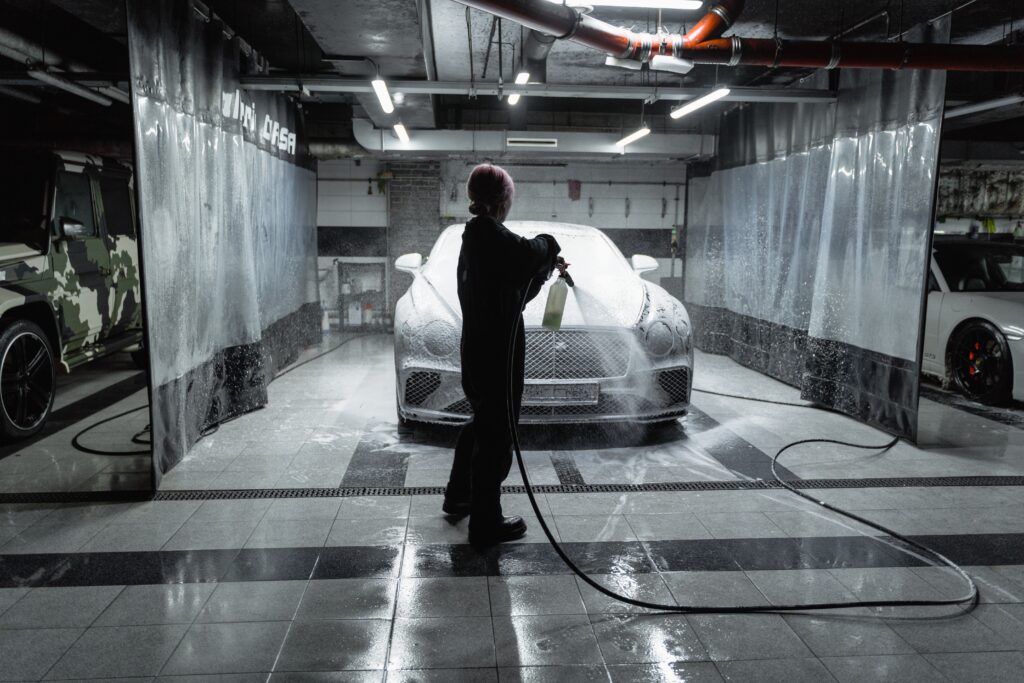
Startup cost is where most new car wash owners get caught off guard. The equipment quote never tells the full story. Site work, utilities, permits, and working capital add up fast. This section gives you the headline numbers — for the complete itemized breakdown of every cost category, including the items that consistently catch new owners off guard, see How Much Does It Cost to Build a Car Wash from Scratch?.
Buying an Existing Car Wash
Purchasing an operating car wash is the fastest path to cash flow. Equipment is installed, the customer base exists, and revenue starts from day one.
| Cost Item | Low Estimate | High Estimate | Notes |
|---|---|---|---|
| Purchase price (existing operation) | $50,000 | $600,000 | Depends on revenue multiple, equipment age, and lease |
| Due diligence and legal fees | $3,000 | $10,000 | Lawyer review, financial audit, inspection |
| Equipment repairs or upgrades | $5,000 | $60,000 | Older equipment often needs immediate work |
| Rebranding and cosmetic refresh | $3,000 | $25,000 | Signage, paint, lighting |
| Working capital reserve | $20,000 | $50,000 | 6 months of operating costs minimum |
| TOTAL (buying existing) | $81,000 | $745,000 |
Building a New Self-Serve or In-Bay Automatic
| Cost Item | Low Estimate | High Estimate | Notes |
|---|---|---|---|
| Land (lease or purchase) | $12,000/yr lease | $500,000+ purchase | Urban land drives costs up sharply |
| In-bay automatic machine | $80,000 | $150,000 | Per unit; most sites have 1 to 3 bays |
| Self-serve bay equipment (per bay) | $15,000 | $40,000 | Wand units, timer systems, foam applicators |
| Site construction and paving | $30,000 | $200,000 | Drainage, concrete, canopy, utilities |
| Utility hookups (water, sewer, electric) | $10,000 | $80,000 | Water reclaim systems add cost but reduce operating costs |
| Payment systems and kiosks | $5,000 | $30,000 | Card readers, contactless, loyalty systems |
| Permits and licensing | $5,000 | $40,000 | Varies heavily by city and state |
| Signage and exterior | $3,000 | $20,000 | |
| Insurance (first year) | $5,000 | $25,000 | |
| Working capital reserve | $25,000 | $60,000 | |
| TOTAL (new build, self-serve/in-bay) | $190,000 | $1,145,000 |
Building a New Express Tunnel
| Cost Item | Low Estimate | High Estimate | Notes |
|---|---|---|---|
| Land purchase | $300,000 | $2,000,000 | High-traffic corner sites are essential |
| Tunnel building construction | $400,000 | $1,500,000 | 80 to 130 ft tunnel with all systems |
| Tunnel wash equipment | $150,000 | $500,000 | Conveyor, brushes, dryers, chemical systems |
| Vacuum stations and canopy | $40,000 | $120,000 | |
| Utility infrastructure | $30,000 | $100,000 | |
| Payment and POS systems | $20,000 | $60,000 | |
| Permits and licensing | $15,000 | $60,000 | |
| Staffing and training (pre-open) | $10,000 | $30,000 | |
| Marketing and grand opening | $10,000 | $40,000 | |
| Working capital reserve | $50,000 | $150,000 | |
| TOTAL (express tunnel) | $1,025,000 | $4,560,000 |
Key Warning: Water and sewer infrastructure is the most underestimated cost in new car wash builds. A standard car wash uses 40 to 100 gallons per vehicle. Many jurisdictions require water reclamation systems that cost $30,000 to $80,000 to install. Confirm local water use requirements before you commit to a site.
Equipment alone — separate from land, construction, and utilities — deserves its own close look, especially if you are comparing self-serve, in-bay, and tunnel systems against each other. That full breakdown, including specific brands and what drives equipment cost up or down, is in Car Wash Equipment Cost: Self-Serve vs In-Bay vs Tunnel.
How a Car Wash Runs Day to Day
The operational demand of a car wash depends heavily on which model you operate. Here is what daily management actually looks like across the main types — and the complete checklist, including weekly tasks and the maintenance habits that prevent expensive equipment failures, is in How to Run a Car Wash: Daily Operations Checklist and Owner Time Guide.
Self-Serve and In-Bay Automatic — Daily Tasks
- Open the site and confirm all equipment is operational
- Check water pressure, soap levels, and payment systems
- Clean and clear bays — debris, leaves, leftover foam
- Empty and review payment vault or reconcile card totals
- Respond to any equipment jams or customer issues
- Inspect drainage and water reclaim systems
Self-Serve and In-Bay Automatic — Weekly Tasks
- Deep clean equipment, nozzles, and wand heads
- Restock chemical supplies — soap, wax, rinse aid, tire cleaner
- Test and calibrate payment systems
- Check and lubricate mechanical components
- Review revenue reports against previous weeks
Express Tunnel — Daily Tasks
- Open and run equipment test cycle before first customer
- Manage 1 to 4 attendants depending on volume
- Monitor conveyor speed, chemical application rates, and dryer output
- Handle customer service, jams, and vehicle damage claims
- Close procedure — equipment flush, chemical top-up, cash reconciliation
Staffing Reality
| Model | Staff Typically Needed | Monthly Wage Cost |
|---|---|---|
| Self-serve bays only | 0 to 1 part-time | $0 — $1,500 |
| In-bay automatic | 0 to 1 part-time | $0 — $2,000 |
| Express tunnel | 3 to 8 employees | $9,000 — $25,000 |
| Full-service detail | 2 to 6 employees | $6,000 — $18,000 |
| Mobile detailing | Owner only (or 1 helper) | $0 — $3,000 |
Owner Time Reality: A self-serve or in-bay automatic car wash can be managed in 10 to 20 hours per week. An express tunnel is closer to a full-time operation — most successful tunnel owners either work it full-time or hire a general manager.
A huge part of running a modern car wash profitably now centers on membership operations — sign-up conversion, churn tracking, and recurring billing. That operational layer is covered fully in Car Wash Membership Programs: How to Build Recurring Revenue from Day One.
How Much Profit Does a Car Wash Make?
Profit depends on car count, average ticket, and how tightly you control water, chemical, and labor costs. Here are realistic figures based on actual car wash operations. For the complete income breakdown — including how monthly net profit varies across the full range of outcomes within each model — see How Much Does a Car Wash Make Per Month? Real Income Breakdown.
Revenue Calculation by Model
| Car Wash Type | Cars Per Day (Average) | Average Ticket | Daily Revenue | Monthly Gross Revenue |
|---|---|---|---|---|
| Self-serve bays (3 bays) | 30 — 60 | $5 — $8 | $150 — $480 | $4,500 — $14,400 |
| In-bay automatic (2 machines) | 40 — 100 | $8 — $14 | $320 — $1,400 | $9,600 — $42,000 |
| Express tunnel | 200 — 600 | $12 — $20 | $2,400 — $12,000 | $72,000 — $360,000 |
| Full-service detail | 10 — 30 | $30 — $80 | $300 — $2,400 | $9,000 — $72,000 |
| Mobile detailing (solo) | 3 — 8 | $100 — $250 | $300 — $2,000 | $9,000 — $60,000 |
Net Profit After Expenses — Three Operation Sizes
| Small (Self-Serve/In-Bay) | Mid-Size (In-Bay + Self-Serve) | Express Tunnel | |
|---|---|---|---|
| Monthly gross revenue | $6,000 — $15,000 | $15,000 — $35,000 | $60,000 — $200,000 |
| Monthly operating costs | $3,000 — $8,000 | $8,000 — $20,000 | $40,000 — $130,000 |
| Monthly net profit | $2,500 — $7,000 | $6,000 — $15,000 | $15,000 — $70,000 |
| Annual net profit | $30,000 — $84,000 | $72,000 — $180,000 | $180,000 — $840,000 |
Important Context: These figures assume a well-located car wash at solid traffic volume. A poorly located car wash — even with excellent equipment — can run at 30% of capacity and lose money every month. Location is the single most important variable in this business. See Car Wash Location Strategy for the full site evaluation process.
Monthly Operating Cost Breakdown
| Expense Category | Self-Serve / In-Bay | Express Tunnel |
|---|---|---|
| Water and sewer | $500 — $2,000 | $3,000 — $10,000 |
| Chemicals and supplies | $300 — $1,500 | $2,000 — $8,000 |
| Electricity | $400 — $1,500 | $2,000 — $8,000 |
| Equipment maintenance and repairs | $500 — $2,000 | $2,000 — $8,000 |
| Rent or mortgage payment | $1,000 — $5,000 | $5,000 — $20,000 |
| Labor | $0 — $2,000 | $9,000 — $25,000 |
| Insurance | $300 — $800 | $1,000 — $3,000 |
| Payment processing fees | $100 — $400 | $500 — $2,000 |
| Miscellaneous | $200 — $500 | $500 — $2,000 |
Membership Revenue — The Game-Changer for Tunnels
Express tunnel operators have largely shifted to a monthly membership model. Customers pay a flat monthly fee (typically $20 to $40) for unlimited washes. This creates predictable recurring revenue that smooths out weather-dependent slow periods.
| Membership Count | Average Monthly Fee | Monthly Recurring Revenue |
|---|---|---|
| 500 members | $25 | $12,500 |
| 1,000 members | $25 | $25,000 |
| 2,000 members | $25 | $50,000 |
| 3,000 members | $25 | $75,000 |
A tunnel with 1,500 to 2,000 active members plus pay-per-wash revenue is a very different business than one running purely on transactional volume. Membership is the primary reason express tunnel valuations have risen sharply over the past decade. The complete playbook for building this kind of membership base from day one — pricing tiers, technology requirements, and conversion tactics — is in Car Wash Membership Programs: How to Build Recurring Revenue from Day One.
Break-Even Timeline
| Startup Cost | Monthly Net Profit | Break-Even Time |
|---|---|---|
| $100,000 (existing self-serve purchase) | $3,500/month | 29 months |
| $250,000 (new in-bay build) | $5,000/month | 50 months (4.2 years) |
| $500,000 (larger in-bay + self-serve combo) | $8,000/month | 63 months (5.2 years) |
| $1,500,000 (express tunnel build) | $25,000/month | 60 months (5 years) |
Most car wash investors target a 4 to 6 year payback. Buying an existing profitable operation is almost always faster to profitability than building new — but you pay a premium for that running start. For the full break-even math across every scenario, including how membership penetration and ramp-up periods shift these numbers, see the Car Wash Break-Even Analysis: How Long Until You Make Your Money Back.
Buying a Car Wash vs. Building New
This question comes up constantly from people researching how to start a car wash business. The honest answer is: it depends on your capital and your risk tolerance.
| Factor | Buying Existing | Building New |
|---|---|---|
| Time to first revenue | Immediate | 6 to 24 months |
| Startup cost | Lower (usually) | Higher |
| Unknown problems | Higher (hidden equipment issues) | Lower (you built it) |
| Customization | Limited | Full control |
| Existing customer base | Yes | Must build from scratch |
| Risk level | Medium | Medium-High |
Rule of thumb: If you find an existing car wash at 3x to 4x annual net earnings with equipment in decent shape, buying is almost always better than building in the same market. If the only options are overpriced or poorly located operations, building new in a better location is worth the extra lead time.
This is a big enough decision to deserve its own full treatment — including the due diligence checklist for buying and the budgeting discipline for building. See Buying vs. Building a Car Wash: Which Makes More Financial Sense?.
How to Start a Car Wash Business — Step by Step
Step 1 — Research Your Market
Before committing a dollar, validate whether the location supports a car wash. You need:
- Daily traffic count of at least 20,000 to 30,000 vehicles on your target street (express tunnel) or 10,000+ (in-bay/self-serve)
- No more than two established car washes within a 1 to 2 mile radius
- Demographics that support spending — car ownership, income levels, vehicle age
- Drive the area at multiple times of day and count vehicles at nearby competitors
This is the single highest-stakes step in the entire process — a wrong location cannot be fixed later. The complete site evaluation framework, including how to verify traffic count and read a competitive landscape, is in Car Wash Location Strategy: How to Pick a Site That Actually Makes Money.
Step 2 — Choose Your Model
Decide before you commit to land or a lease whether you are building self-serve, in-bay, tunnel, or mobile. This shapes every decision that follows — budget, site size, permitting, and staffing.
Step 3 — Secure Your Site
| Site Requirement | Self-Serve / In-Bay | Express Tunnel |
|---|---|---|
| Minimum lot size | 4,000 — 10,000 sq ft | 30,000 — 60,000 sq ft |
| Traffic count (daily vehicles) | 10,000+ | 25,000 — 40,000+ |
| Water and sewer access | Required | Required (high volume) |
| Zoning | Commercial / automotive | Commercial / automotive |
| Corner lot preferred | Yes | Strongly preferred |
Step 4 — Get Permits and Licenses
| Permit / License | Where to Get It | Typical Timeline |
|---|---|---|
| Business license | Local city or county | 1 — 4 weeks |
| Building permit | Local building department | 2 — 16 weeks |
| Plumbing permit | Local building department | 2 — 8 weeks |
| Environmental / water use permit | State or local EPA authority | 4 — 24 weeks |
| Stormwater discharge permit | State environmental agency | 4 — 16 weeks |
| Zoning / conditional use permit | Local planning department | 4 — 24 weeks |
| Fire inspection | Local fire department | 1 — 4 weeks |
Important: Car washes face stricter environmental permitting than most businesses because of water discharge and chemical runoff. Budget 4 to 6 months for permitting before you can open. You will pay rent or carry land costs during this entire window.
Step 5 — Purchase and Install Equipment
For most operators, equipment represents 30% to 60% of total startup cost. Key decisions:
- Self-serve bays: PDQ, Mark VII, or Belanger wand systems are common brands; $15,000 to $40,000 per bay
- In-bay automatics: Sonny’s, WashTec, and PDQ are dominant; $80,000 to $150,000 per machine
- Tunnels: Sonny’s CarWash, Coleman Hanna, and Belanger are industry leaders; $150,000 to $500,000 for the full tunnel equipment package
Always get three equipment quotes. Distributors often bundle installation, training, and first-year service contracts — evaluate the full package cost, not just the machine price. For a detailed comparison of friction vs. touchless systems, tunnel length vs. throughput, and how to evaluate competing quotes, see Car Wash Equipment Cost: Self-Serve vs In-Bay vs Tunnel.
Step 6 — Set Up Payment Systems
Payment systems have moved far beyond coin operation. Modern car washes use:
- Card readers on each bay: Highest convenience, moderate hardware cost
- Central pay kiosk: Customers pay before pulling into the bay
- License plate recognition: Automatic membership billing — customers scan through without stopping
- App-based accounts: Loyalty programs, membership management, and prepaid packages
License plate recognition is now standard at express tunnels and increasingly common at in-bay operations. It eliminates payment friction and supports monthly membership programs — the technology backbone covered in Car Wash Membership Programs.
Step 7 — Launch and Market Aggressively
- Google Business Profile: create and optimize before you open — this is your most important marketing asset
- Grand opening promotion: one to two weeks of discounted or free washes drives trial and first membership sign-ups
- Membership push: a car wash that launches with 200 to 300 members from day one has a completely different cash flow profile than one starting at zero
- Local social media: before-and-after videos perform exceptionally well
- Partnerships: fleet accounts (delivery companies, contractors, dealerships) provide consistent daily volume
Step 8 — Monitor and Optimize in the First 90 Days
The first 90 days reveal your real operating costs and your actual customer patterns. Track:
- Cars washed per day by hour
- Membership sign-ups per week
- Chemical cost per car washed
- Equipment downtime incidents
- Revenue per day vs. operating cost per day
Problems caught in the first 90 days cost far less than problems discovered at month 12. The daily and weekly tracking habits that protect your margin long after the first 90 days are covered in How to Run a Car Wash: Daily Operations Checklist and Owner Time Guide.
Is a Car Wash Business Worth Starting in 2026?
The honest answer: yes — but only with the right location and adequate capital.
A Car Wash Is Worth It If:
- You have identified a high-traffic site with limited direct competition nearby
- You have sufficient capital to cover the build or purchase plus 6 months of operating reserves
- You are targeting a market where existing car washes are coin-only or poorly maintained
- You plan to implement a membership model from launch
- You are patient — this is a 4 to 6 year payback business, not a quick return
A Car Wash Is Not Worth It If:
- You cannot clearly identify where your customer traffic will come from
- You are underfinanced — starting without 6 months of reserves is high risk
- The market is already well-served by newer, card-based competitors
- You are buying an existing wash with aging equipment and a short remaining lease
- You need income within the first 6 months — car washes take time to build volume and membership
These same red flags are responsible for the majority of car wash failures every year. The full breakdown of what most commonly goes wrong — and how to avoid it — is in Why Car Washes Fail: 7 Risks Every New Owner Should Know.
The 2026 Opportunity
The car wash industry is in a consolidation phase. Large regional chains are buying up independent operators. But this creates real opportunity for independent owners:
- Older coin-only self-serve and in-bay operations are losing customers to modern competitors — these can be acquired cheaply and upgraded
- Membership models are under-implemented at thousands of independent locations — adding memberships to an existing cash wash can increase net profit by 30% to 60% without adding a single car
- Urban and suburban markets with new housing development often lack sufficient car wash capacity
- EV adoption is increasing car wash frequency — EV owners cannot use home driveway washing easily, and EVs still get just as dirty as gas vehicles
The operators winning in 2026 are investing in contactless payment, membership programs, water reclaim systems that reduce utility costs, and sites with genuine traffic count advantages. The ones struggling are running cash-only, coin-only operations with deferred maintenance.
Final Verdict
| Factor | Rating | Notes |
|---|---|---|
| Passive income potential | Medium to High | In-bay and self-serve can run 10 — 20 hrs/week; tunnels require full-time attention |
| Startup cost barrier | High | $80,000 minimum; $1M+ for serious tunnel builds |
| Recession resistance | High | Car washing is habitual and low-cost to the consumer |
| Profit potential | Medium to Very High | $2,500/month (small self-serve) to $70,000+/month (large tunnel) |
| Time to profitability | Slow to Moderate | 3 — 6 years depending on model and capital |
| Complexity to operate | Medium | Equipment knowledge, water management, and payment systems all required |
| Scalability | High | Adding locations or membership volume scales well once the model is proven |
For the complete, honest assessment of whether this investment makes sense for you specifically — including the conditions under which it does and does not work — see Is a Car Wash a Good Investment in 2026? Honest Pros and Cons.
Disclaimer: Figures in this guide are estimates based on publicly available data and general market conditions. Always verify current numbers with local equipment distributors, commercial real estate agents, and licensed contractors before making a financial decision. BusinessDiscovered does not sell machines, franchises, routes, or courses.
Go Deeper on Any Topic
This guide covers the full picture at a high level. For a complete, dedicated breakdown of any specific piece, start here:
Startup Costs
- How Much Does It Cost to Build a Car Wash from Scratch?
- Car Wash Equipment Cost: Self-Serve vs In-Bay vs Tunnel
Operations
- How to Run a Car Wash: Daily Operations Checklist and Owner Time Guide
- Car Wash Membership Programs: How to Build Recurring Revenue from Day One
Profit & Income
- How Much Does a Car Wash Make Per Month? Real Income Breakdown
- Car Wash Break-Even Analysis: How Long Until You Make Your Money Back
Risks
- Why Car Washes Fail: 7 Risks Every New Owner Should Know
- Car Wash Location Strategy: How to Pick a Site That Actually Makes Money
Reviews
- Buying vs. Building a Car Wash: Which Makes More Financial Sense?
- Is a Car Wash a Good Investment in 2026? Honest Pros and Cons
Written by Ava, Business Model Analyst. Ava is a business model researcher at BusinessDiscovered, focused on breaking down the real numbers behind vending machines, laundromats, ATMs, car washes, and other cash-flow businesses. She has spent 10 years analyzing equipment costs, location economics, and operating margins by cross-referencing industry data, distributor pricing, and operator-reported income. Ava’s work follows one rule: no business opportunity, machine, or franchise is ever promoted. Every breakdown is built on the same four-part framework — startup cost, operations, profit, and risk — so readers can compare any business model honestly before investing.
