Introduction
You only have 120 days left to save on home charging. Many homeowners are asking why you must install your EV charger before June 30, 2026 to avoid losing a $1,000 credit. Under the Big Beautiful Bill EV tax changes, the old 2032 deadline no longer applies. Waiting too long could cost you more than just money—it could mean missing out on the last federal incentive for home EV chargers.
Even with utility rebates from PSE&G or JCP&L, combining federal tax credits with state incentives is one of the few ways to make EV charging affordable in 2026. If your charger isn’t active by June 30, the 30% federal tax credit for installing EV charger disappears.
The OBBBA Explained A New June Deadline
The One Big Beautiful Bill Act (OBBBA), officially Public Law 119-21, introduced the final rules for federal EV charger incentives. The key change is the Placed in Service Rule. Your hardware must be operational, not just purchased, to qualify. Buying a charger without installation before the June deadline won’t trigger the credit.
Previously, vehicle credits under Sections 30D and 25E covered EV purchases. Those ended September 30, 2025, making the home charger tax credit the last remaining incentive. Now, the June 30, 2026 deadline is the final opportunity for homeowners to claim savings.
The federal tax credit for installing EV charger only applies if you meet these requirements, and delays can cause missed tax benefits even if your electrician is ready. Understanding the OBBBA rules is critical to avoid errors.
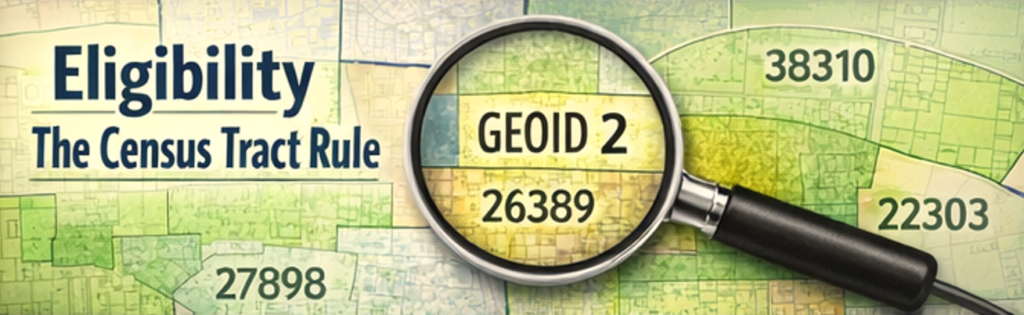
Eligibility The Census Tract Rule
Not every home qualifies. To claim the home EV charger tax credit, your property must meet geographic restrictions. Specifically, the IRS uses the 11-digit GEOID to confirm whether your residence is in a qualifying low-income or non-urban area.
Your property must also be your primary residence. Rental properties or second homes do not qualify under the current law. This rule ensures that the incentives support households that truly need EV charging infrastructure.
To verify eligibility, visit the IRS locator and check your census tract. Only approved tracts will allow full 30% credit under Section 30C. Missing this step can result in denied claims even if you file correctly.
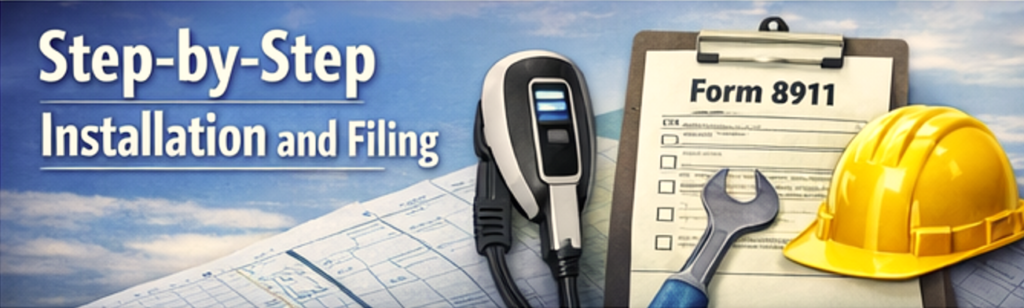
Step-by-Step Installation and Filing
Step 1 Verify Your Census Tract
Use the IRS online locator to check your 11-digit GEOID. Ensure it qualifies for Section 30C incentives. Keep a screenshot for your records.
Step 2 Purchase an Energy Star Level 2 Charger
Select a certified Level 2 charger. Energy Star models guarantee efficiency and compliance with the OBBBA. Check for warranties and compatibility with your EV model.
Step 3 Hire a Certified Electrician
Book an electrician for installation as soon as possible. June is the busiest month, and slots fill fast. Confirm they will provide a dated invoice for the “Placed in Service” requirement.
Step 4 File the 8911 Tax Form
Use the revised December 2025 Form 8911. Each charging port requires a separate Schedule A. Submit all documentation with your tax return to claim the federal tax credit for installing EV charger. Avoid old versions—they will be rejected by the IRS.
Read Also How to Apply for the NJ EV Charger Rebate in 2026
Cost Breakdown and Savings
The total cost of a home EV charger includes hardware and labor. Typical installation ranges between $800 and $2,500 depending on your property’s wiring and distance from your breaker panel.
The 30% federal tax credit applies to total installation costs but is capped at $1,000. Below is a comparison of full price versus after-credit scenarios for common situations:
| Scenario | Hardware Cost | Labor Cost | Total | After 30% Credit | Final Cost |
|---|---|---|---|---|---|
| Standard NJ Home | $600 | $400 | $1,000 | $300 | $700 |
| High-Demand Installation | $1,200 | $800 | $2,000 | $1,000 | $1,000 |
| Multi-Port Charger | $1,500 | $900 | $2,400 | $1,000 | $1,400 |
These numbers illustrate why timely installation is critical. Delays beyond June 30 could make you pay full cost without federal savings.

Common 2026 Filing Mistakes
Many homeowners make avoidable errors that result in lost credits. The most frequent mistakes include:
- Missing the June 30 deadline by even one day. The IRS enforces this strictly.
- Filing the wrong version of Form 8911. Only the December 2025 revision with Schedule A is valid.
- Failing to provide the electrician’s attestation of the “Placed in Service” date. Without proof, your claim may be denied.
- Using ineligible chargers or locations. Verify GEOID before purchase.
- Assuming credits are refundable for all taxes. Credits reduce tax owed; overpayments may not be returned.
Avoiding these mistakes saves both time and money.
2026 Readiness Checklist
Before June 30, confirm the following:
- Checked 11-digit GEOID for 30C eligibility
- Selected Energy Star hardware
- Installation scheduled for completion by June 15
- Professional invoice received with “Placed in Service” date
Use this checklist to keep your claim compliant and maximize savings. Completing steps early reduces stress during the June rush.
Practical Tips
- Schedule installations early. Electricians are booked solid in late spring.
- Keep all receipts and documentation for the IRS.
- Combine federal and local incentives where allowed. PSE&G FlexPower or Make-Ready rebates can supplement your federal savings.
- Consider multi-port chargers carefully; each requires separate Schedule A submissions.
- Stay updated on IRS announcements; minor rule adjustments may occur before the deadline.
These tips help prevent overlooked errors that could cost hundreds of dollars in lost incentives.
FAQ
1. What if my installation is delayed until July 2026
If the charger isn’t active by June 30, 2026, the federal tax credit is forfeited. Planning early is essential.
2. Can I claim the federal tax credit for installing EV charger for a second home
No, Section 30C only applies to your primary residence. Non-primary homes are ineligible.
3. Do I need a separate Schedule A for two charging ports
Yes, each port requires its own Schedule A under the December 2025 Form 8911 revision.
4. Can I stack this with NJ utility rebates from PSEG or JCP&L
Yes, you can combine federal and certain utility incentives. Confirm rebate eligibility before filing.
5. Is the credit refundable if I don’t owe taxes
No, the credit offsets taxes owed. Any unused portion is not refunded.
Conclusion
The June 30, 2026 deadline is fast approaching. Missing it could cost you up to $1,000 in federal savings. The federal tax credit for installing EV charger is your last incentive after vehicle credits expired in September 2025.
Act now: verify your GEOID, order an Energy Star Level 2 charger, schedule installation, and file Form 8911 correctly. Secure your slot with a certified electrician and ensure the hardware is “Placed in Service” before June 30. Every day counts. Waiting could mean paying full cost without credit. Don’t delay—lock in your savings today.

Ethan Carter is a renewable energy and EV incentives expert. He guides homeowners and businesses to maximize federal 30C credits, local rebates, and OBBBA compliance. Ethan shares actionable tips for home charger installations, IRS filings, and cost-saving strategies in 2026.