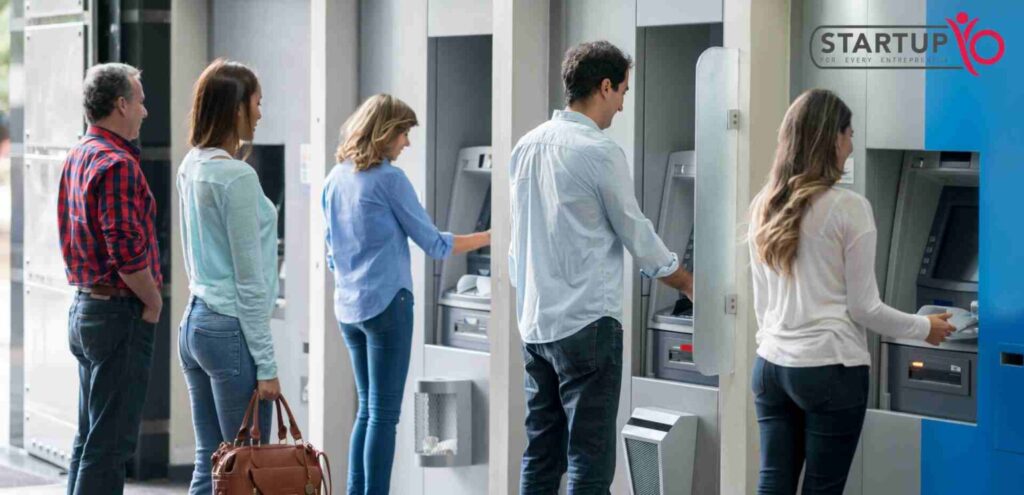
Is ATM Business is better idea in 2026?
Quick Answer
An ATM business earns $2.50 to $4.00 per customer withdrawal. After operating costs, a single well-placed machine nets $200 to $500 per month. Startup cost for one machine runs $3,000 to $8,000 including the cash load. Most operators reach break-even in 6 to 18 months. Income scales directly with the number of machines you operate.
You place a machine. Customers pay $3 to use it. You keep most of that fee every time — with no inventory to manage, no staff to hire, and no product that expires. This guide breaks down exactly how an ATM business works, what it realistically earns, what it costs to start, and whether the numbers actually hold up in 2026.
What Is an ATM Business?
An ATM business is exactly what the name suggests — you own one or more ATM machines, place them in locations where people need cash, and earn a fee every time someone makes a withdrawal. You are not a bank.
You do not hold customer deposits. You simply provide the machine and the cash inside it, and you collect a surcharge on every transaction.
The model is sometimes called “independent ATM deployer” or IAD. The business has one job: put machines where people need cash and make sure those machines are always stocked and working.
Call To Action
ATM BUsiness Model
How the basic model works
- You buy or lease an ATM machineNew machines cost $2,000 to $5,000. Used or refurbished machines cost $800 to $2,500. The machine must be EMV-compliant and ADA-accessible to operate legally in the US.
- You sign a placement agreement with a location ownerA bar, convenience store, laundromat, or any business with foot traffic agrees to host your machine. You typically pay the location owner $50 to $100 per month flat fee, or share 20 to 30% of your surcharge revenue with them.
- You load the machine with cashYour own cash sits inside the vault — typically $2,000 to $5,000 to start. When customers withdraw, that cash leaves, and the same amount is settled back into your business bank account through the processor.
- Customers pay a surcharge to withdrawThe surcharge — typically $2.50 to $4.00 — is paid by the customer at the time of the withdrawal. You keep most of this after the processor takes a small interchange cut.
- You restock cash and monitor remotelyMachines can be monitored remotely via the processor’s software. You restock when cash runs low — weekly or bi-weekly depending on transaction volume. Some operators use armored car services. Most beginners do it themselves.
The core difference from vending machines
An ATM business has zero product cost. There is nothing that spoils, nothing that sells out leaving missed revenue, and no supply chain to manage. Your cash is always returned to you through settlement — you are only earning on the fee, not spending on inventory.
How ATMs Actually Make Money
There are two revenue streams in the ATM business. Most operators only rely on one. Understanding both is important before deciding on your approach.
Revenue stream 1 — Surcharge fees (primary)
This is the $2.50 to $4.00 fee a customer pays to withdraw cash from your machine. You set this amount within limits defined by your processor and the network (Visa, Mastercard, NYCE, Pulse). The surcharge goes directly to you minus a small processing fee of roughly $0.10 to $0.25 per transaction.
The industry standard surcharge in 2026 is $3.00 in most locations. High-traffic venues like dispensaries, nightclubs, and tourist areas often support $4.00 or higher without significantly reducing transaction volume.
Revenue stream 2 — Interchange fees (secondary)
Every ATM transaction also generates a small interchange fee — typically $0.10 to $0.20 per transaction — paid by the customer’s bank to the ATM network, a portion of which flows to you as the machine operator.
This adds up at volume but is not the primary income source for independent operators.
| Revenue type | Amount per transaction | Who pays | Reliability |
|---|---|---|---|
| Surcharge fee | $2.50 – $4.00 | Customer | Primary — every withdrawal |
| Interchange fee | $0.10 – $0.20 | Customer’s bank | Secondary — every withdrawal |
| Processing fee (deducted) | –$0.10 to –$0.25 | You pay this | Cost per transaction |
The math on a single transaction
If you share 20% of the surcharge with the location owner, your net per transaction drops to roughly $2.35. At 200 transactions per month, that is $470 gross before your other monthly operating costs.
$3.00
Customer pays surcharge
industry average 2026
–$0.20
Processing fee deducted
approx. per transaction
+$0.15
Interchange earned
approx. per transaction
~$2.95
Net per transaction
before location split
Real Profit Ranges — Low, Average & High Scenarios
Profit per machine varies enormously based on one factor above everything else: transaction volume at your location. Here is what three real scenarios look like after all costs are accounted for.
Bad location
Low scenario
Transactions/month: 50–80
Gross revenue: $150–$240
Operating costs: $90–$130
Location split: $30–$50
Net: $30–$80/month
Decent location
Average scenario
Transactions/month: 150–250
Gross revenue: $450–$750
Operating costs: $100–$150
Location split: $60–$100
Net: $200–$500/month
Premium location
High scenario
Transactions/month: 300–500+
Gross revenue: $900–$1,500+
Operating costs: $130–$200
Location split: $100–$200
Net: $500–$1,100/month
What the numbers on ATM seller websites never show you?
Many ATM seller sites quote “$900 per month per machine” as if that is normal. It is not. That figure assumes 300 transactions at $3 each with zero costs subtracted. Real operators with real machines in real locations consistently report $200 to $500 net after costs at a good location. The high scenario is possible but rare outside dispensaries, nightclubs, and high-traffic tourist areas.
Scale business
Income at scale — multiple machines
| Number of machines | Conservative net/month | Average net/month | Strong net/month |
|---|---|---|---|
| 1 machine | $100–$200 | $200–$350 | $400–$600 |
| 3 machines | $300–$600 | $600–$1,050 | $1,200–$1,800 |
| 5 machines | $500–$1,000 | $1,000–$1,750 | $2,000–$3,000 |
| 10 machines | $1,000–$2,000 | $2,000–$3,500 | $4,000–$6,000 |
| 20 machines | $2,000–$4,000 | $4,000–$7,000 | $8,000–$12,000 |
Startup Cost Breakdown — What It Actually Takes to Begin
Starting an ATM business requires two types of capital: money you spend once (the machine, setup costs, LLC), and money that stays inside the machine as your operating cash float. The float is not a cost — it is your working capital that comes back to you on every settlement cycle. Many beginners underestimate the total cash needed because they only budget for the machine.
| Cost item | Low estimate | High estimate | Notes |
|---|---|---|---|
| ATM machine (used) | $800 | $2,500 | Must be EMV-compliant, ADA-accessible |
| ATM machine (new) | $2,000 | $5,000 | Warranty included, fewer early repair risks |
| Initial cash load (vault) | $2,000 | $5,000 | Working capital — returned via settlement |
| LLC formation | $50 | $500 | Varies by state; strongly recommended |
| Business bank account | $0 | $100 | Many banks offer free business accounts |
| Processing setup fee | $0 | $200 | Many processors waive this |
| Wireless modem / connection | $100 | $300 | One-time hardware + first month |
| Installation (if professional) | $0 | $300 | Many operators self-install |
| Business license (local) | $50 | $400 | City/county level; varies widely |
$3,000
Used machine total (all-in)
minimum realistic start
$5,500
New machine total (all-in)
typical first machine
$8,000
Premium new machine (all-in)
with higher cash load
~30% less
Second machine onwards
LLC & setup already done
Used vs new machine — which makes more sense?
Used machines save money upfront but come with more risk. Dispensers fail. Motherboards die. A $1,200 used machine that needs $800 in repairs in year one is not the bargain it appeared.
New machines carry warranties and fewer early failures. For a first machine, most operators with limited capital choose a quality refurbished unit from a reputable dealer — not the cheapest machine on eBay.
The cash float is not lost money
The $2,000 to $5,000 you load into the vault does not disappear. Every time a customer withdraws $100, that $100 settles back into your business bank account — plus your surcharge fee. The vault cash just rotates. You need enough float to cover several days of withdrawals between your restocking visits, but it is always yours.
Monthly Income Expectations by Location Type
Location is the single most important variable in the ATM business. The same machine generating $80 a month at a slow gas station could earn $600 at a busy bar a mile away.
Choosing the right location is the skill that separates profitable operators from unprofitable ones.
| Location type | Avg. monthly transactions | Net profit/month | Why it works |
|---|---|---|---|
| Cannabis dispensary | 300–600+ | $600–$1,200+ | Cash-only or cash-preferred purchases, no nearby ATMs |
| Nightclub / bar (busy) | 250–500 | $500–$1,000 | High foot traffic, card readers often skip |
| Laundromat (24hr) | 150–300 | $300–$600 | Regular customers, coin-operated machines nearby |
| Convenience store (24hr) | 150–250 | $250–$450 | Consistent traffic, impulse cash needs |
| Festival / event venue | Variable | $200–$800/event | Short-term placement; very high per-event volume |
| Grocery store / pharmacy | 80–150 | $100–$250 | Steady but competing with bank-owned ATMs nearby |
| Hotel lobby | 50–150 | $100–$300 | Captive audience, but often seasonal |
| Office building lobby | 30–70 | $30–$120 | Low transaction volume; cashless workforce |
| Low-traffic retail | 10–40 | $0–$60 | Not worth the placement; avoid |
The 150-transaction rule
A location that cannot support at least 150 transactions per month at a $3.00 surcharge will struggle to cover your operating costs and generate meaningful profit. Before placing a machine, estimate daily foot traffic and ask the location owner if they have ever had an ATM before and why it was removed.
Business Costs
Operating Costs — What You Pay Every Month
The ATM business has low but real monthly costs. Understanding these before you start ensures your profit projections are accurate rather than optimistic.
| Cost item | Monthly cost | Notes |
|---|---|---|
| Processing / network fees | $20–$35 | Charged by your ATM processor per month or per transaction |
| Wireless / internet connection | $15–$25 | Cellular modem lease or dedicated data SIM |
| Location fee (flat) | $50–$100 | If you agreed a flat monthly fee with the location owner |
| Location revenue share (20%) | Varies | If you agreed a % split: $60–$150/month at average volume |
| Receipt paper | $5–$10 | ~$50 per case, one case lasts 2–3 months |
| Maintenance / repairs | $0–$50 avg | Sporadic; budget $300–$500/year per machine |
| Insurance | $10–$30 | General business liability; some operators skip this early |
| Armored car cash loading | $0–$85/visit | Optional — most beginners self-load; scales up later |
| Fuel / travel to restock | $10–$40 | Depends on number of machines and distance |
$90
Minimum monthly costs
lean single-machine operator
$130–$200
average single machine
average single machine
$250–$350
outsourced cash loading
With armored car service
The hidden cost most beginners miss
idle cash opportunity cost
Break-Even Timeline & ROI Explained
Break-even in the ATM business is the point at which your cumulative net profit covers your total startup cost. The time it takes depends entirely on location quality and the machine cost you paid upfront.
Example: average scenario
| Scenario | Machine cost | Net/month | Break-even |
|---|---|---|---|
| Best case (hot location, new machine) | $4,500 | $600/mo | ~8 months |
| Typical (good location, refurb machine) | $3,500 | $300/mo | ~12 months |
| Average (decent location, new machine) | $5,000 | $250/mo | ~20 months |
| Poor case (weak location) | $3,500 | $80/mo | ~44 months |
Break-even timeline — what to expect month by month
Month 0
Setup and launch
Machine installed, cash loaded, processor activated. You are now out $3,500–$8,000 total including your cash float.
Months 1–3
Learning phase
Transaction volume builds as regulars discover the machine. Typical net of $100–$250/month. You learn your restocking schedule and real operating costs.
Months 4–8
Steady state
Volume stabilises. You know whether the location is a winner or needs replacing. Good locations hit $250–$500/month net consistently.
Months 9–18
Break-even for most operators
Most operators in decent locations have recovered their machine cost and setup investment by this point. Every dollar earned from here is profit.
Month 18+
Scaling phase
Profit from machine 1 funds machine 2. Most operators add machines every 6–12 months once the first machine is paid off and running smoothly.
Note on the cash float at break-even
Break-even calculations above refer only to recovering the machine cost and setup fees — not the cash float. The cash in the vault is always yours and is returned through settlement. It is working capital, not a cost. When you sell or relocate a machine, you simply remove the cash from the vault.
Common Mistakes Beginners Make
Most ATM businesses that fail do not fail because the model does not work. They fail because the operator made one of a handful of predictable mistakes. These are the ones that come up consistently among real operators.Mistake 1 — Choosing location based on convenience, not traffic
The most common and most expensive mistake. A machine placed at a friend’s slow retail shop, or a location picked because it is close to home, may never reach 100 transactions a month. Always choose location based on verified foot traffic — not relationships or convenience.Mistake 2 — Buying the cheapest used machine availableMistake 3 — Skipping the placement agreementMistake 4 — Underloading the vaultMistake 5 — Ignoring compliance requirementsMistake 6 — Expecting passive income from day one
Is the ATM Business Worth It in 2026? Honest Review
Despite the growth of digital payments, cash usage in the United States remains significant. Bars, cannabis dispensaries, food markets, street vendors, and many service businesses still operate largely in cash.
The customer base for independent ATMs is not shrinking — it is concentrating in specific, identifiable locations.
What is working in 2026
- Cannabis dispensaries remain the highest-earning ATM placement category as many are still cash-preferred due to federal banking restrictions
- Contactless/NFC-enabled ATMs are seeing transaction volume increases as younger users who carry no physical cards can now use tap-to-withdraw
- Festival and event placements provide strong short-term income opportunities as cashless event infrastructure lags
- Independent operators with 5 to 20 well-placed machines are reporting consistent $2,000 to $8,000 per month net income
What is harder in 2026
- Good locations are harder to find as the industry has matured — most obvious high-traffic spots already have ATMs
- Windows 10 end-of-life in October 2025 means older ATMs running Windows OS require upgrades or replacement
- Cash use is genuinely declining in suburban and high-income demographics, thinning transaction volume in some previously solid locations
- ATM physical security concerns are real — machines in isolated or poorly lit locations face vandalism and smash-and-grab risk
Worth it — if you secure the right locations
The ATM business remains one of the most genuine low-overhead passive income models available to a small operator in 2026. The business model itself is sound. The startup cost is accessible. The operations are learnable. The scaling logic is straightforward.
The honest challenge is not the model — it is location quality. An operator who cannot secure 3 to 5 genuinely high-traffic placements will struggle to make meaningful income. An operator who can find and hold good locations will build a reliable income stream that scales with each machine added.
Who this is right for: Someone willing to spend 60 to 90 days actively prospecting locations, willing to move a machine that is not performing, and patient enough to let the income compound over 18 to 24 months. If that describes you, the ATM business is a serious option in 2026.
Frequently Asked Questions
How much does an ATM business make per month?
A single ATM in a good location nets $200 to $500 per month after all costs. High-traffic locations like bars or cannabis dispensaries can reach $500 to $1,100 per month net. Operators with 5 to 10 machines typically earn $1,500 to $4,000 per month total.
How much does it cost to start an ATM business?Do you need a license to own an ATM?How many transactions does an ATM need to be profitable?How do I find locations for my ATM?
Is the ATM business still viable with the rise of digital payments?
