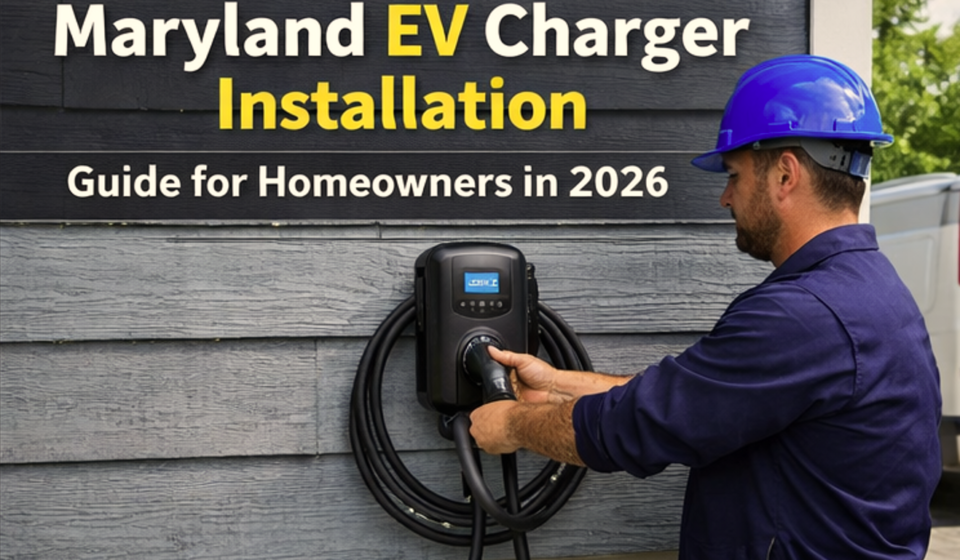

Electric vehicles are growing fast across the United States. Maryland is one of the states pushing this transition with incentives and infrastructure support.
Many homeowners now want to install charging equipment at home. A proper Maryland EV charger installation allows faster charging, lower electricity costs, and better daily convenience.
However, installation involves permits, electrical upgrades, and safety rules. Understanding the process before hiring an electrician can save money and prevent delays.
This guide explains how installation works in Maryland, what it costs, and what homeowners should expect in 2026.
Why Maryland homeowners are installing EV chargers
Maryland has strong policies that encourage electric vehicle adoption. The state wants more charging stations to support its clean transportation goals.
Public chargers exist in many areas. Still, home charging remains the most practical option for daily use.
Home charging provides several advantages.
- Charging overnight at lower electricity rates
- Avoiding public charging station queues
- Faster Level 2 charging capability
- Increased property value for EV ready homes
Many Maryland residents now install Level 2 chargers in garages or driveways. These chargers deliver much faster charging compared with standard outlets.
Maryland EV charger installation requirements
Installing EV charging equipment requires several checks before work begins.
Local electrical codes ensure installations remain safe and compliant.
Homeowners usually need to meet these requirements.
Electrical capacity
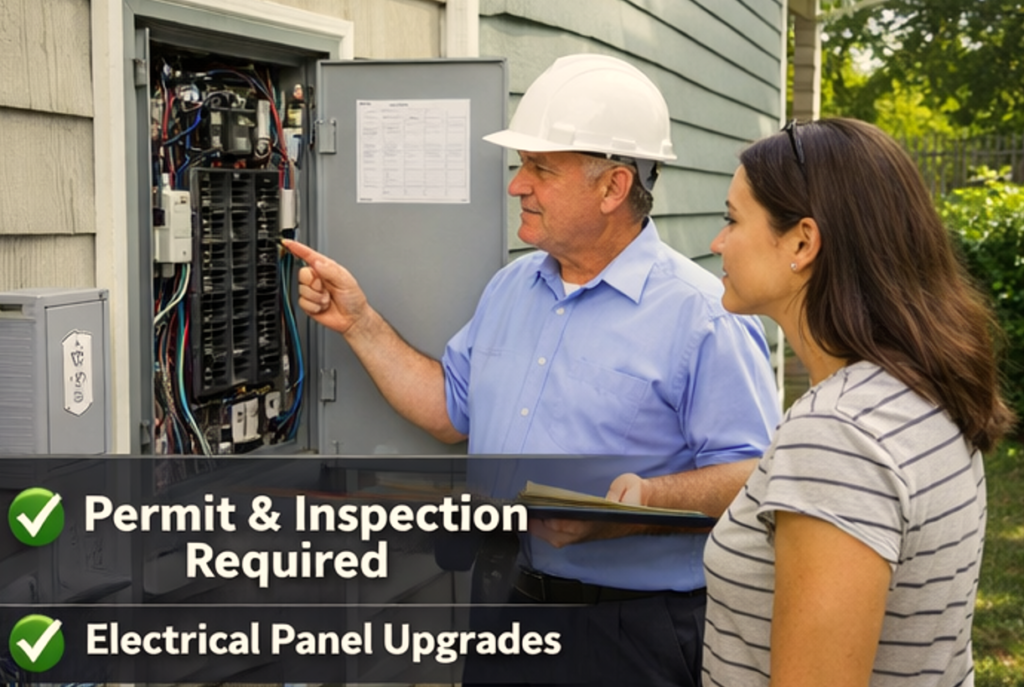
A Level 2 charger normally needs a 240 volt circuit. Older homes may require electrical panel upgrades.
Electricians check whether the panel can support the added load.
Permits from the local authority
Most counties require an electrical permit before installation begins.
The permit confirms that the work follows Maryland building codes.
Inspection after installation
After installation, an inspector verifies the system. Approval confirms that wiring, grounding, and breaker connections meet safety standards.
Location planning
Installers determine where the charger will sit. Garage walls, driveways, and exterior walls are common locations.
Distance from the electrical panel can affect installation cost.
Types of EV chargers available for homes
Most residential systems use either Level 1 or Level 2 chargers.
The table below explains the main differences.
| Charger Type | Power Supply | Charging Speed | Typical Use |
|---|---|---|---|
| Level 1 | Standard 120V outlet | Slow | Emergency or occasional charging |
| Level 2 | 240V circuit | Fast | Daily home charging |
Level 1 charging adds only a few miles of range each hour.
Level 2 systems can add 20 to 40 miles of range per hour depending on the vehicle.
For this reason, nearly all professional installations in Maryland use Level 2 chargers.
Step by step Maryland EV charger installation process
Understanding the process helps homeowners plan correctly.
Step 1 Electrical assessment
A licensed electrician inspects the electrical panel and wiring.
The goal is to confirm that the system can support a new circuit.
Step 2 Choosing the charger model
Homeowners select a compatible charger based on vehicle type and charging speed.
Popular options include wall mounted smart chargers.
Step 3 Permit application
The electrician normally submits the electrical permit to the local authority.
Processing time varies by county.
Step 4 Installation of wiring and breaker
The electrician installs a dedicated 240 volt circuit from the panel to the charger location.
This includes conduit, wiring, and a breaker.
Step 5 Mounting the charger
The charger unit is attached to the wall or mounting bracket.
Connections are tested before power is restored.
Step 6 Final inspection
Local inspectors verify the work meets electrical safety standards.
After approval, the charger becomes fully operational.

Maryland EV charger installation cost breakdown
Installation costs vary depending on electrical upgrades and distance from the panel.
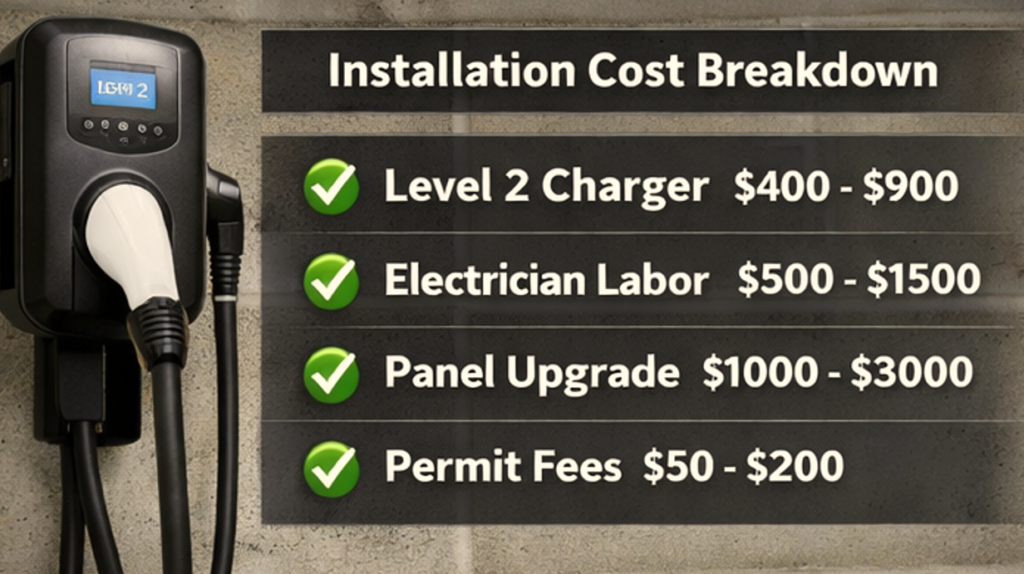
Typical cost ranges in Maryland look like this.
| Installation Factor | Estimated Cost |
|---|---|
| Level 2 charger equipment | $400 to $900 |
| Electrical labor | $500 to $1500 |
| Panel upgrade if needed | $1000 to $3000 |
| Permit fees | $50 to $200 |
Most homeowners spend between $900 and $2500 for a standard installation.
Costs increase when the electrical panel requires upgrades or long wiring runs.
Many homeowners reduce costs using the federal EV charger tax credit.
This credit covers a percentage of qualified installation expenses.
Incentives available for Maryland EV charging
Maryland supports EV infrastructure with several incentives.
Programs change regularly, but homeowners often benefit from these options.
Federal EV charger tax credit
The federal government provides a tax credit for residential charging equipment.
Homeowners may receive up to 30 percent of installation costs.
Eligibility depends on property location and installation date.
Maryland state incentives
The Maryland Energy Administration occasionally offers rebate programs for residential chargers.
These programs may provide rebates for qualified charging equipment.
Utility company rebates
Some Maryland utilities offer additional incentives for EV charging equipment.
Homeowners should check with their electricity provider.
Checklist before installing a home charger
Use this checklist before scheduling installation.
- Confirm your electrical panel capacity
- Choose a Level 2 charger compatible with your vehicle
- Hire a licensed electrician familiar with EV installations
- Check available federal and state incentives
- Apply for the required electrical permit
- Schedule inspection after installation
Following these steps reduces delays and prevents compliance problems.
Common mistakes homeowners make
Many installations run into problems because of poor planning.
These mistakes appear often in residential projects.
Skipping electrical inspections
Some homeowners try to avoid permit requirements. This creates safety risks and can cause problems during home sales.
Choosing the wrong charger
Different vehicles use different connectors and charging rates.
Always confirm compatibility before purchase.
Ignoring panel capacity
Older homes sometimes lack sufficient electrical capacity.
Upgrading the panel early avoids installation delays.
Poor charger placement
A poorly placed charger can make daily charging inconvenient.
Installers usually recommend locations close to parking areas.
Practical tips for Maryland EV charger installation
A few simple decisions can make installation easier.
Choose a charger with smart features that allow scheduling and energy monitoring.
Install the charger close to the parking area to reduce cable clutter.
Plan extra conduit space in case future upgrades become necessary.
Check electricity rates from your utility provider. Charging overnight can significantly reduce energy costs.
Finally, always hire a licensed electrician familiar with EV infrastructure.
Professional installation ensures long term reliability.
FAQs
How long does EV charger installation take in Maryland
Most installations take two to four hours after permits are approved.
Electrical upgrades may require additional time.
Do I need a permit to install a home EV charger
Yes. Most Maryland counties require an electrical permit and inspection.
What is the average Maryland EV charger installation cost
Typical installations range from $900 to $2500 depending on electrical work required.
Can I install an EV charger myself
Homeowners can purchase chargers, but electrical installation should be handled by licensed electricians.
Are there rebates for EV chargers in Maryland
Some programs exist through the federal government, utilities, and state agencies.
Availability depends on funding cycles.
Final thoughts for Maryland homeowners
Electric vehicles are becoming a normal part of daily transportation. Home charging makes ownership easier and far more convenient.
A proper Maryland EV charger installation ensures safe charging, faster vehicle readiness, and lower long term energy costs. Planning ahead helps avoid unnecessary electrical upgrades and permit delays.
Homeowners who install charging equipment soon may still qualify for federal incentives that reduce installation costs. Waiting too long could mean missing those benefits.
If you are planning to purchase an electric vehicle, now is the right time to schedule an electrical assessment and begin preparing your home charging setup.