
Electric vehicles are rapidly becoming part of everyday life across the United States. As more drivers switch to electric transportation, one of the first upgrades homeowners consider is installing a home EV charger.
A proper EV charger installation allows faster charging, lower long-term electricity costs, and the convenience of charging your vehicle overnight. While public charging stations are expanding, home charging remains the most reliable solution for daily EV use.
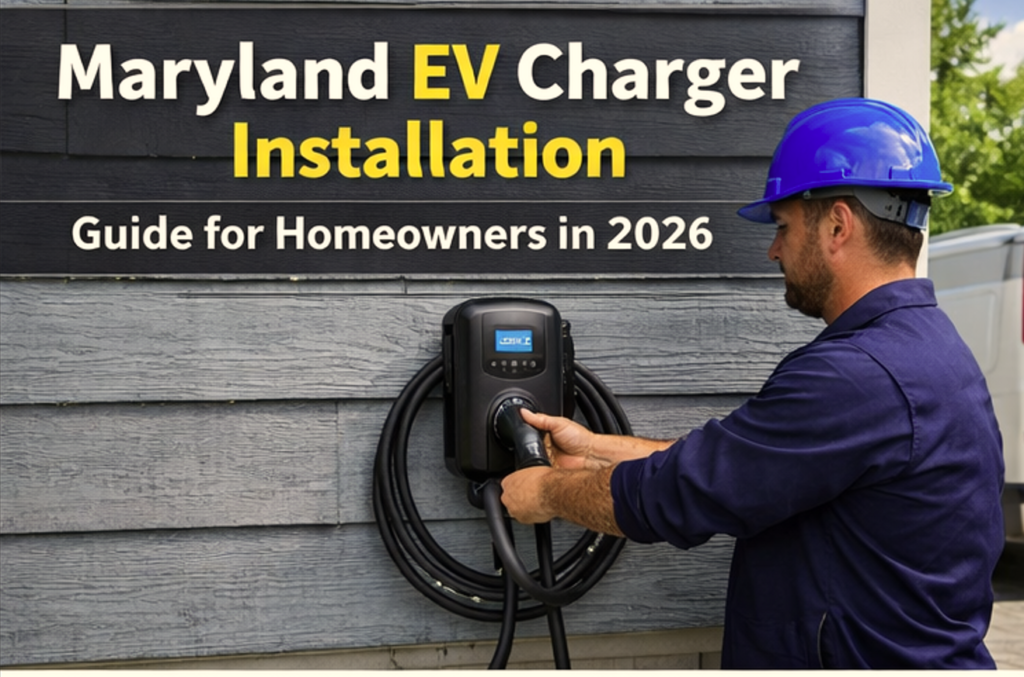
This complete 2026 guide explains how EV charger installation works, what equipment is required, expected costs, permits, and the step-by-step process homeowners should understand before hiring an electrician.
Why Home EV Charger Installation Is Becoming Essential
Home charging has become the preferred solution for EV owners for several reasons.
Most drivers charge their vehicles overnight, making home charging the most convenient option. Instead of visiting public charging stations, homeowners can simply plug in their vehicle and wake up to a fully charged battery.
Home charging also offers several advantages:
• Lower electricity costs compared to public fast chargers
• Reliable overnight charging
• No waiting at charging stations
• Faster charging with Level 2 equipment
• Increased property value for EV-ready homes
Because of these benefits, many homeowners install Level 2 chargers in garages or driveways.
Types of Home EV Chargers
There are two main types of residential EV chargers.
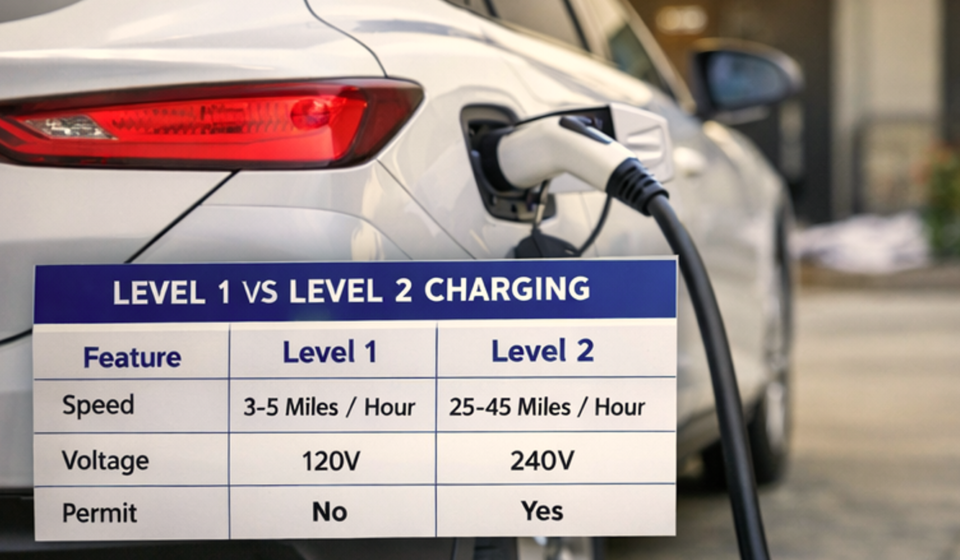
| Charger Type | Voltage | Charging Speed | Best Use |
|---|---|---|---|
| Level 1 | 120V | 3–5 miles per hour | Occasional charging |
| Level 2 | 240V | 20–45 miles per hour | Daily home charging |
Level 1 chargers use a normal household outlet but charge very slowly.
Level 2 chargers use a 240-volt circuit similar to a clothes dryer outlet. These chargers dramatically improve charging speed and are the standard choice for most homeowners.
Nearly all professional EV charger installation projects involve Level 2 systems.
Step-by-Step EV Charger Installation Process
Understanding the installation process helps homeowners plan correctly and avoid delays.
Step 1 — Electrical Panel Assessment
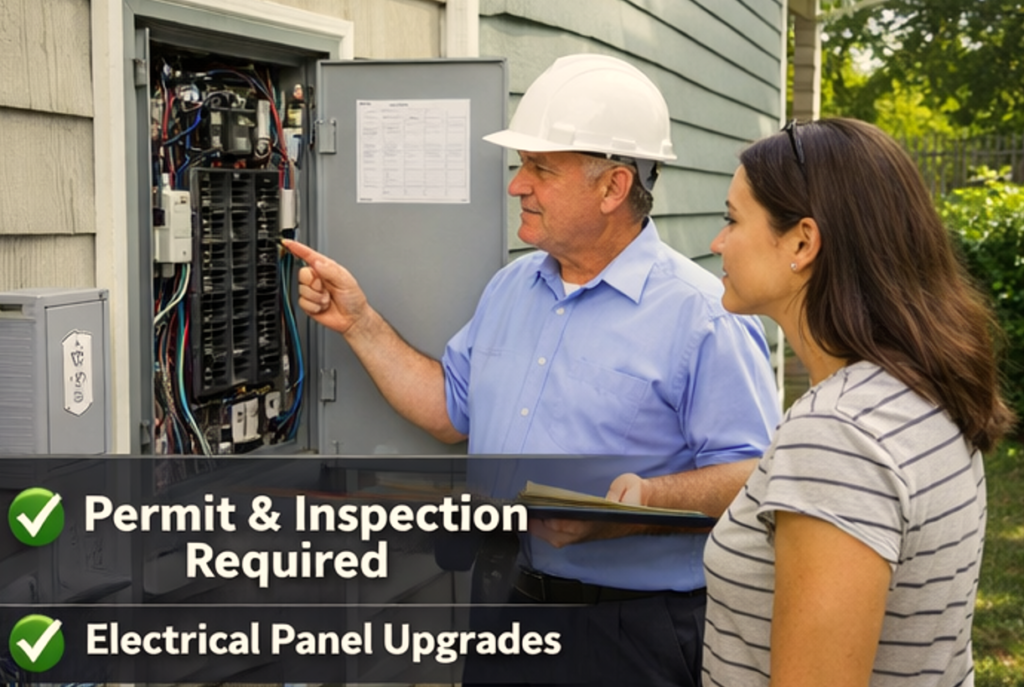
The first step is evaluating your home’s electrical panel.
A licensed electrician checks:
• Available breaker space
• Panel amperage capacity
• Existing electrical load
• Distance from panel to installation location
Many modern homes with 200-amp service can support Level 2 chargers without upgrades.
Older homes with 100-amp service may require panel upgrades.
Step 2 — Choosing the Right Charger
Next, homeowners select a compatible charger.
Popular options include:
• Smart Wi-Fi chargers
• Wall-mounted chargers
• Hardwired chargers
• Plug-in chargers using NEMA 14-50 outlets
Smart chargers allow scheduling and energy monitoring through mobile apps.
Step 3 — Permit Application
Most cities require an electrical permit before installation begins.
Permit requirements typically include:
• Work performed by a licensed electrician
• Electrical permit approval
• Final inspection after installation
Permit systems vary by location. Some cities now use digital permit portals to speed approvals.
Skipping permits can create safety risks and problems during home resale.
Step 4 — Installing a Dedicated Circuit
During installation, the electrician installs a dedicated 240-volt circuit from the electrical panel to the charger location.
This usually includes:
• Conduit installation
• Electrical wiring
• Dedicated breaker installation
• Grounding protection
The charger must have its own circuit to handle continuous EV charging safely.
Step 5 — Mounting the Charger
The EV charger unit is then mounted on the wall or installed on a pedestal.
Typical installation locations include:
• Garage walls
• Driveway exterior walls
• Parking area posts
Proper placement ensures easy access to the charging cable.
Step 6 — Final Inspection
After installation, a local inspector verifies the system meets electrical safety codes.
The inspection confirms:
• Correct breaker sizing
• Proper grounding
• Code-compliant wiring
• Secure mounting
Once approved, the EV charger becomes fully operational.
If you are looking for location-specific rules and rebates, you can also explore our detailed city installation guides:
- Maryland EV Charger Installation Guide
- EV Charger Installation Austin Guide
- EV Charger Installation Denver Guide
These city guides explain local permits, rebates, and inspection rules.
EV Charger Installation Cost in 2026
Installation cost varies depending on electrical work required and distance from the panel.
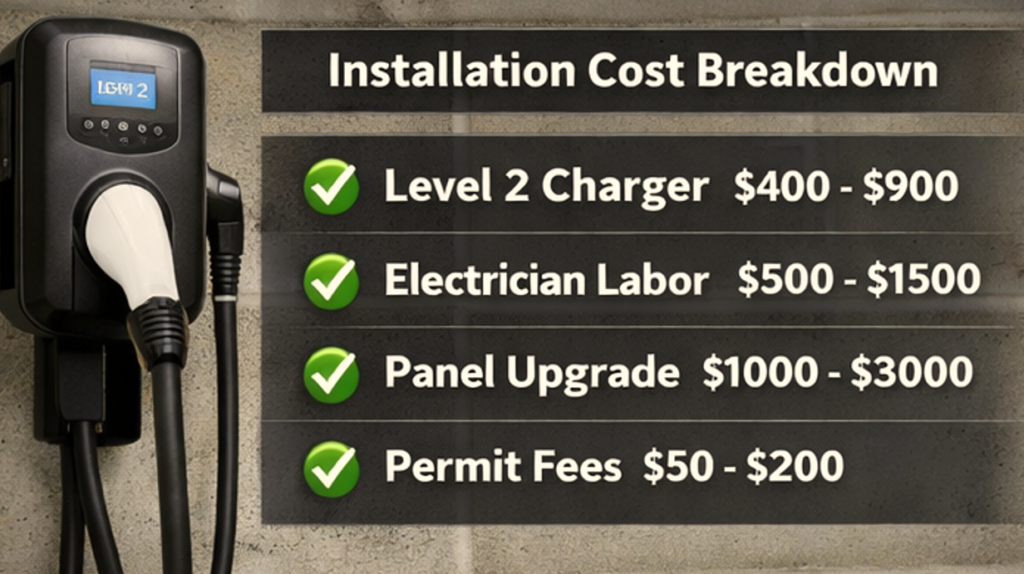
Typical costs for residential installations are shown below.
| Installation Factor | Typical Cost |
|---|---|
| Level 2 charger equipment | $400 – $900 |
| Electrical labor | $500 – $1500 |
| Panel upgrade (if needed) | $1000 – $3000 |
| Permit fees | $50 – $200 |
Most homeowners spend between $900 and $2500 for a standard installation.
Homes that require electrical panel upgrades may pay more.
Federal EV Charger Tax Credit
The federal government currently offers the EV charger tax credit (Section 30C).
This credit covers:
• 30% of equipment and installation cost
• Up to $1000 for residential installations
To qualify, installation must occur in eligible census areas.
The credit is currently scheduled to expire in mid-2026 unless extended by Congress.
Because of this deadline, many homeowners are installing chargers sooner to secure the incentive.
Factors That Affect Installation Cost
Several factors influence total installation cost.
Distance from Electrical Panel
Longer wiring runs increase labor and material cost.
Electrical Panel Capacity
Homes requiring panel upgrades face higher costs.
Indoor vs Outdoor Installation
Outdoor installs may require weather-resistant equipment and additional conduit.
Trenching Requirements
Detached garages or outdoor parking areas may require trenching.
Home EV Installation Checklist
Before scheduling installation, confirm the following:
• Electrical panel capacity verified
• Level 2 charger selected
• Licensed electrician hired
• Permit requirements confirmed
• Incentive eligibility checked
• Installation location planned
• Inspection scheduled
Following this checklist reduces delays and unexpected expenses.
Common EV Charger Installation Mistakes
Many homeowners encounter problems because of poor planning.
Common mistakes include:
Skipping electrical permits
Hiring unlicensed electricians
Ignoring panel capacity limits
Installing the charger too far from the parking space
Not planning for a second electric vehicle
Proper planning prevents these issues.
Tips for a Better Home EV Charging Setup
A few smart decisions can improve long-term charging performance.
Choose a smart charger that allows scheduling and energy monitoring.
Install the charger close to the parking position to reduce cable clutter.
Plan for future EV purchases by leaving conduit space for additional circuits.
Check utility electricity rates because charging overnight can significantly reduce energy costs.
City-Specific EV Charger Installation Guides
Permit rules, rebates, and utility incentives vary widely by location.
To help homeowners understand local requirements, we have created detailed city guides.
You can explore them here:
Maryland EV Charger Installation Guide
EV Charger Installation Austin Guide
EV Charger Installation Denver Guide
Each guide explains:
• Local permit requirements
• Available rebates
• Utility programs
• Real installation costs
• Local inspection rules
Frequently Asked Questions
How long does EV charger installation take?
Most standard installations take 2 to 4 hours after permits are approved.
Panel upgrades may require additional time.
Do I need a permit to install a home EV charger?
Yes. Most cities require an electrical permit and final inspection for Level 2 chargers.
Can I install an EV charger myself?
Homeowners can purchase chargers, but installation should be performed by a licensed electrician due to high-voltage electrical work.
What is the average EV charger installation cost?
Most homeowners spend $900 to $2500 depending on electrical work required.
Are rebates available?
Yes. Incentives may include:
• Federal EV charger tax credit
• State energy programs
• Utility company rebates
Availability varies by location.
Short Summery
Electric vehicles are transforming how people travel. Installing a home EV charger makes ownership easier and far more convenient.
A professional EV charger installation ensures safe electrical connections, faster charging, and reliable daily use. With federal incentives still available in 2026, many homeowners are choosing to install chargers sooner rather than later.
If you are planning to buy an electric vehicle, now is the ideal time to schedule an electrical assessment and prepare your home for reliable charging.