
Introduction
Electric vehicle ownership is growing quickly across Chicago. More residents are choosing electric cars to reduce fuel costs and avoid rising gasoline prices. The city has also expanded its public charging network over the past few years.
Even with public chargers available, many drivers prefer charging at home. Overnight charging is more convenient and often cheaper than public stations. Home charging also ensures the vehicle is ready for daily commuting.
Because of this shift, demand for ev charger installation chicago services has increased significantly in 2026. Homeowners are contacting licensed electricians to install reliable charging systems in garages and driveways.
If you are looking for EV Charger Installation Guide for Homeowners follow the link attached for complete details.
Local building codes, permits, and electrical panel requirements play an important role in these installations. Understanding how the process works in Chicago helps homeowners plan properly and avoid delays.
Clear Explanation of EV Charger Installation
Electric vehicles can charge using two common systems at home.
Level 1 charging uses a standard wall outlet. It usually provides around 3 to 5 miles of range per hour. This method works for occasional driving but is slow for daily commuters.
Level 2 charging uses a 240-volt circuit similar to a clothes dryer outlet. It can add 20 to 30 miles of range per hour depending on the charger model.
Most homeowners choose Level 2 systems because they charge a vehicle overnight. A full battery is often ready in six to eight hours.
For this reason, Level 2 charger installation Chicago services are the most common residential projects handled by electricians. These systems require a dedicated circuit and sometimes a panel upgrade.
Local Requirements for EV Charger Installation Chicago
Chicago has strict electrical and construction rules that apply to home charger installations.
The city follows the Chicago Electrical Code, which differs slightly from the national electrical code used in other regions. Electrical work must follow local conduit requirements and safety standards.
Homeowners usually need an EV charger permit Chicago before installation begins. This permit ensures the electrical work meets city safety regulations.
Permit applications are typically submitted through the Chicago Department of Buildings. Some electricians handle this process on behalf of homeowners.
Inspections are also required. A city inspector may review the electrical connection, breaker size, and grounding.
Panel capacity is another major factor. Many homes built before 2000 still operate on 100-amp service panels. Some Level 2 chargers require 40 to 60 amps.
If the panel cannot support the load, an electrician may recommend a panel upgrade.
Hiring a licensed EV charger electrician Chicago is important because Chicago requires certified electrical contractors for most residential electrical work.
Step by Step EV Charger Installation Process in Chicago
Homeowners usually experience a similar process when installing a charger.
Electrical Panel Inspection
The electrician checks the panel capacity and breaker availability. They confirm whether the system can support a new 240-volt circuit.
Permit Submission
The installer submits permit documents to the Chicago Department of Buildings.
Approval may take several days depending on project size.
Circuit Installation
Once approved, electricians run wiring from the panel to the charging location.
Chicago requires conduit protection for many residential wiring routes.
Charger Mounting
The charger unit is mounted on the garage wall or exterior surface. Proper placement ensures cable reach and weather protection.
Final Inspection
A city inspector reviews the installation to confirm compliance with electrical code standards.
Once approved, the charger can be used safely.

EV Charger Installation Cost Chicago
The EV charger installation cost Chicago homeowners pay varies depending on several factors.
Simple installations are cheaper when the electrical panel already has enough capacity. More complex installations require panel upgrades or longer wiring runs.
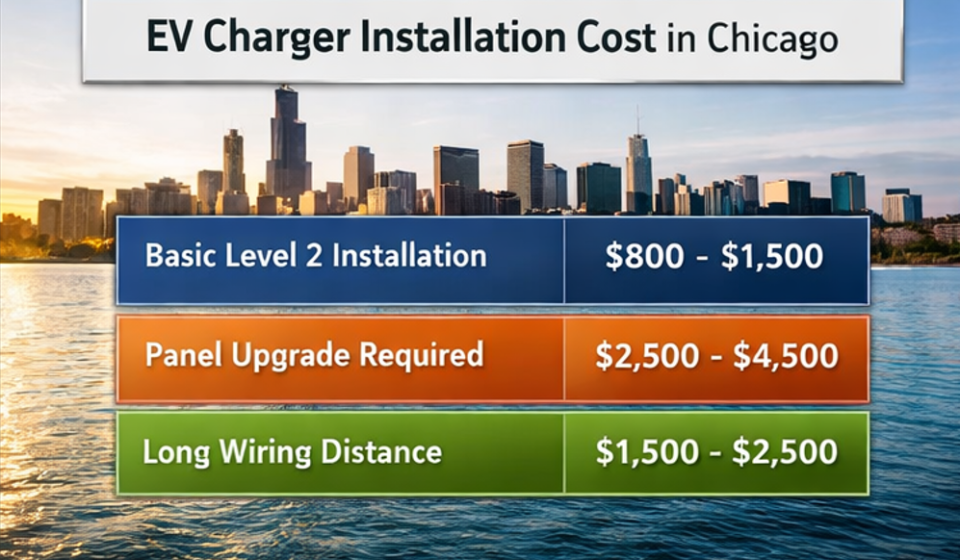
Typical residential costs in Chicago fall within the following range.
| Installation Type | Typical Cost |
|---|---|
| Basic Level 2 installation | $800 – $1,500 |
| Installation with long wiring run | $1,500 – $2,500 |
| Installation with panel upgrade | $2,500 – $4,500 |
Several factors influence the total price.
Distance between the panel and the garage increases wiring costs.
Older homes may need service panel upgrades.
Outdoor chargers require weatherproof installation equipment.
Permit fees in Chicago can also add to the total cost.
Because of these variables, many homeowners request an on-site inspection before starting the project.
Local Incentives and Rebates
Several incentives can reduce the cost of installing a charger in Chicago. Find Ev Installation Services in Chacago with best google rating with complete company details.
The federal government still offers the Alternative Fuel Vehicle Refueling Property Credit. Homeowners may claim up to 30 percent of installation costs under current tax rules.
Illinois also offers incentive programs through the Illinois Environmental Protection Agency. Some programs focus on expanding charging infrastructure across the state.
Utility companies sometimes offer rebates for smart charging systems. ComEd has previously supported EV infrastructure through energy programs.
Availability of rebates may change yearly, so homeowners should confirm current programs before installing a charger.
Planning installation before incentive deadlines can reduce overall project cost.
Common Mistakes Homeowners Make in Chicago
Many homeowners rush into installation without understanding city requirements.
One common mistake is skipping the permit process. Chicago requires permits for most electrical modifications. Installing without approval can cause problems during home inspections or resale.
Another issue involves choosing the wrong charger type. Some drivers install slower chargers that do not meet daily driving needs.
Electrical panel capacity is another overlooked factor. Installing a charger without evaluating panel load can lead to breaker trips.
Poor placement is also common. Chargers mounted too far from the vehicle parking position can make daily use inconvenient.
Working with a qualified installer prevents these problems.
Practical Installation Tips for Chicago Homes
Chicago housing styles vary widely. Some homes have detached garages located behind the main property.
When the garage is separate from the house, electrical wiring must run underground or through overhead conduit.
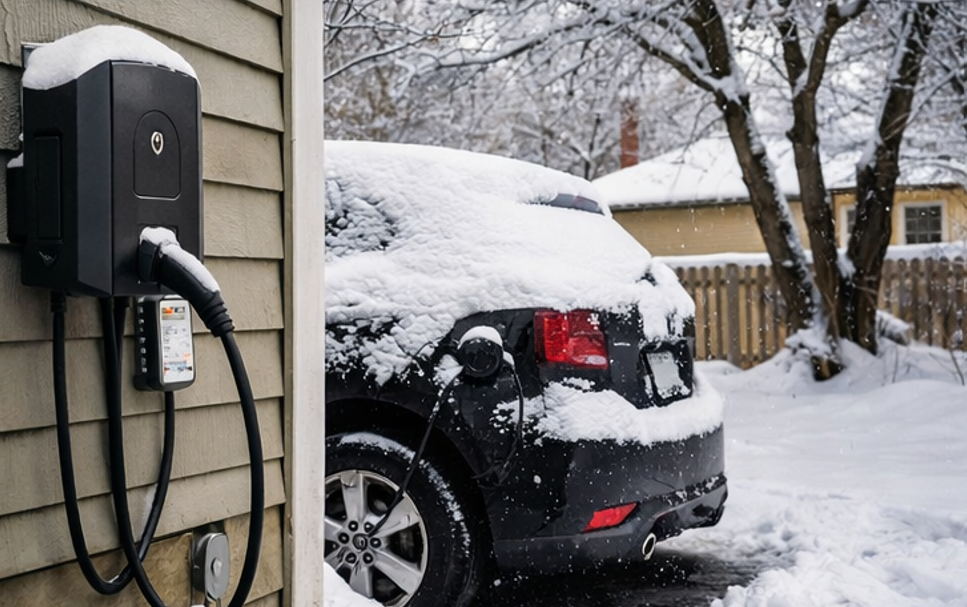
Homeowners should also consider winter conditions. Charging cables and connectors must withstand freezing temperatures and snow exposure.
Installing the charger inside a garage often protects equipment from extreme weather.
Future planning is also helpful. Some homeowners install higher-capacity wiring so they can upgrade chargers later without rewiring the entire system.
Home Installation Checklist
Before starting home EV charger installation Chicago projects, homeowners should review several steps.
Confirm electrical panel capacity.
Choose a charger compatible with the vehicle.
Hire a licensed EV charger electrician Chicago.
Check local permit requirements.
Plan charger location near the parking area.
Review rebate and tax credit options.
Schedule final inspection after installation.
This checklist helps ensure the project moves smoothly.
Frequently Asked Questions
How long does EV charger installation take in Chicago
Most installations take three to five hours once permits are approved. Panel upgrades may extend the project to a full day.
Do I need a permit for EV charger installation Chicago
Yes. Chicago usually requires an electrical permit for installing a Level 2 charger or adding a new circuit.
Can older Chicago homes support Level 2 chargers
Many older homes can support them, but some require panel upgrades. An electrician must inspect the system first.
Is outdoor charger installation allowed in Chicago
Yes. Outdoor chargers are common for homes without garages. Installers use weatherproof units designed for snow and rain.
How much does home EV charger installation Chicago usually cost
Most homeowners pay between $800 and $2,500 depending on wiring distance, panel capacity, and charger location.
Conclusion
Electric vehicle ownership continues to expand across Chicago. Reliable home charging makes daily driving easier and reduces reliance on public stations.
Installing a charger at home provides convenience, faster charging, and long-term savings. Understanding local permits, electrical requirements, and installation costs helps homeowners avoid delays and unexpected expenses.
Demand for ev charger installation chicago services is expected to grow as more residents switch to electric vehicles.
Planning installation early can help homeowners take advantage of incentives and secure qualified electricians before demand rises further.
Homeowners considering an electric vehicle should begin evaluating installation options now. Preparing early ensures a smooth charging setup before EV adoption accelerates across the city.