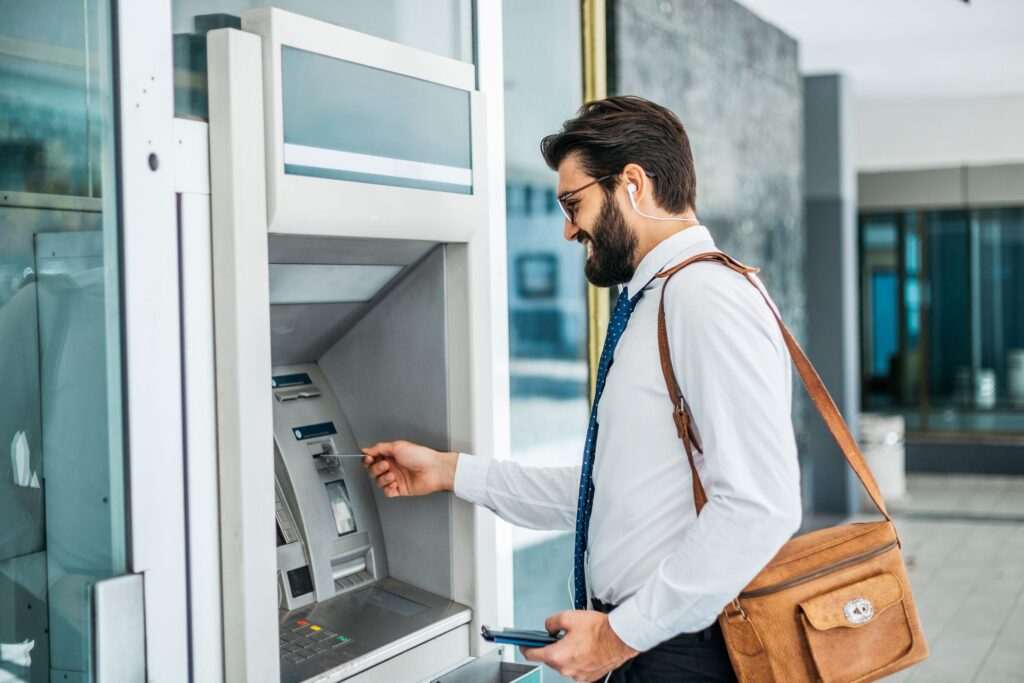
The ATM business is constantly marketed online as “easy passive income.”
You buy a machine, place it in a store, and supposedly collect money forever while doing almost nothing.
That sounds great.
But how true is it actually?
The honest answer is somewhere in the middle.
An ATM business can become semi-passive over time, especially once multiple machines are operating smoothly. But beginners who expect fully automated income from day one are usually disappointed quickly.
Like most small businesses, ATM income becomes easier after systems are built.
This guide explains what parts of the ATM business are truly passive, what work is actually involved, how much time operators realistically spend managing machines, and whether the business still makes sense in 2026 for people seeking lower-maintenance income.
Why the ATM Business Gets Called Passive Income
Compared to many traditional businesses, ATM operations are relatively simple.
There is:
- No inventory to manage
- No employees required initially
- No customer service desk
- No storefront lease
- No product manufacturing
- No shipping department
An ATM earns revenue automatically every time someone withdraws cash.
That automation is what attracts people looking for passive or semi-passive income streams.
Once installed, a machine can generate income daily without constant direct selling.
That is very different from service businesses where revenue stops the moment you stop working.
The Part That Actually Is Passive
Several aspects of ATM ownership genuinely become low-maintenance over time.
Automated Transactions
The machine handles withdrawals automatically.
Customers complete their own transactions without your involvement.
You are not manually processing payments or interacting with buyers.
Automated Settlement
Modern ATM processors automatically settle funds into your business bank account.
Money flows through the system with very little manual work.
Remote Monitoring
Most operators can monitor machines remotely using processor software.
You can check:
- Cash levels
- Transaction counts
- Error alerts
- Connectivity issues
Without physically visiting every location daily.
Predictable Operations
Once a machine stabilizes in a good location, transaction patterns become fairly predictable.
Experienced operators eventually know:
- Refill schedules
- Peak transaction days
- Monthly averages
- Maintenance cycles
This predictability reduces daily management stress.
The Part That Is Not Passive
This is where many YouTube videos become misleading.
ATM businesses still require work.
Sometimes a lot of work early on.
Finding Good Locations
This is the hardest part of the entire business.
Operators may spend:
- Weeks prospecting businesses
- Driving to locations
- Pitching owners
- Negotiating agreements
- Evaluating foot traffic
The business does not become passive until strong locations are secured.
Loading Cash
ATMs do not refill themselves.
Someone must physically:
- Withdraw bank cash
- Transport money safely
- Reload the machine
- Balance settlement records
Beginners usually handle this personally.
As machine counts increase, some operators hire armored cash services.
Maintenance and Repairs
Machines eventually break.
Common issues include:
- Cash jams
- Receipt printer failures
- Connectivity issues
- Keypad problems
- Dispenser errors
Even reliable machines occasionally require service visits.
Handling Poor Locations
Not every placement succeeds.
Operators sometimes need to:
- Relocate machines
- Renegotiate commissions
- Replace underperforming sites
Weak locations are part of the business reality.
How Much Time Does an ATM Business Actually Take?
The answer depends heavily on machine count.
One Machine
A single ATM often requires only:
- A few hours weekly
- One or two refill trips
- Basic monitoring
The bigger time investment is usually securing the location initially.
Three to Five Machines
This is where operations become more structured.
Operators may spend:
- Several hours weekly managing cash logistics
- Scheduling refill routes
- Monitoring transaction reports
Many small operators still manage this part-time.
Ten or More Machines
At this stage, systems matter much more.
Operators often begin outsourcing:
- Cash loading
- Repairs
- Technical support
The business becomes more managerial than hands-on.
Ironically, larger ATM routes can sometimes feel more passive than small ones because systems improve with scale.
Why Some ATM Operators Burn Out
The business appears simpler online than it feels in reality.
Common reasons operators quit include:
Weak Locations
Poor placements create low income while still requiring maintenance effort.
Unrealistic Expectations
Some beginners expect effortless income immediately.
The early phase often involves active work.
Cash Management Stress
Handling large amounts of physical cash is uncomfortable for some people.
Scaling Too Quickly
Buying multiple machines before learning operations can create financial pressure.
Successful operators usually scale gradually.
Can the ATM Business Become Truly Passive?
Yes — partially.
But usually only after reaching scale.
A mature ATM route with:
- Reliable locations
- Established refill schedules
- Outsourced cash loading
- Reliable repair support
Can become relatively low-maintenance.
At that point, operators often spend more time reviewing reports than physically managing machines.
But reaching that stage takes time.
What Experienced ATM Operators Actually Do Daily
The reality is less glamorous than social media often suggests.
Most experienced operators spend time on:
- Reviewing transaction reports
- Checking cash levels
- Coordinating refills
- Monitoring downtime
- Searching for better locations
- Managing processor relationships
It becomes operational management rather than “doing nothing.”
Why ATM Businesses Appeal to Side Hustle Owners
Despite the work involved, ATM businesses still attract side-income entrepreneurs because they offer:
- Recurring revenue
- Relatively low overhead
- Scalable income
- Flexible schedules
- No staffing requirements initially
Many operators run small ATM routes alongside full-time jobs.
The business can fit around other income sources better than many traditional businesses.
Passive Compared to What?
This is the important comparison.
Compared to:
- Running a restaurant
- Operating a retail store
- Managing employees
- Providing services daily
The ATM business absolutely feels more passive.
Compared to:
- Index fund investing
- Bond income
- Dividend portfolios
It is much more active.
ATM ownership sits somewhere in the middle.
The Biggest Myth About ATM Passive Income
The biggest myth is that the machine itself creates the business.
It does not.
The real value comes from:
- Securing strong locations
- Maintaining uptime
- Managing cash efficiently
- Scaling carefully
The ATM is only the tool generating transactions.
The operator still manages the system behind it.
How Operators Reduce Workload Over Time
Successful ATM owners gradually automate or outsource tasks.
Armored Cash Services
Cash loading companies can:
- Refill machines
- Handle transport security
- Reduce owner travel
This becomes common for larger routes.
Dedicated Repair Technicians
Many operators eventually stop handling technical repairs personally.
Smarter Route Planning
Machines clustered geographically reduce travel time significantly.
Better Monitoring Software
Modern ATM software reduces unnecessary site visits.
Is the ATM Business Still Worth It?
For the right person, yes.
The ATM business still offers:
- Low employee dependency
- Predictable recurring revenue
- Reasonable scalability
- Flexible operation
But it works best for people comfortable with:
- Physical cash handling
- Location prospecting
- Operational management
- Long-term scaling
It is not instant effortless income.
It is a small operational business that can eventually become semi-passive.
Who the ATM Business Fits Best
ATM ownership tends to work best for people who:
- Want recurring income
- Prefer operational businesses over sales-heavy businesses
- Are comfortable negotiating with business owners
- Can manage logistics consistently
- Have patience to scale gradually
It fits poorly for people expecting “hands-off money” immediately.
Final Thoughts
The ATM business in 2026 is not fake passive income.
But it is also not fully passive.
The reality is more balanced.
Early stages require active effort:
- Finding locations
- Loading cash
- Solving operational issues
- Learning the business
Over time, good systems and multiple machines can reduce workload significantly.
Many successful operators eventually manage profitable ATM routes with relatively little daily involvement.
But that low-maintenance phase is earned through good operations, not purchased automatically with the machine itself.
The ATM business is best viewed as:
A scalable, semi-passive operational business — not a magic income machine.
